Use Google Translator at Navigation Bar to read in any other Language -- Scroll Down for Weather Maps
Weather Forecast for Asian, Middle Eastern and East African Regions
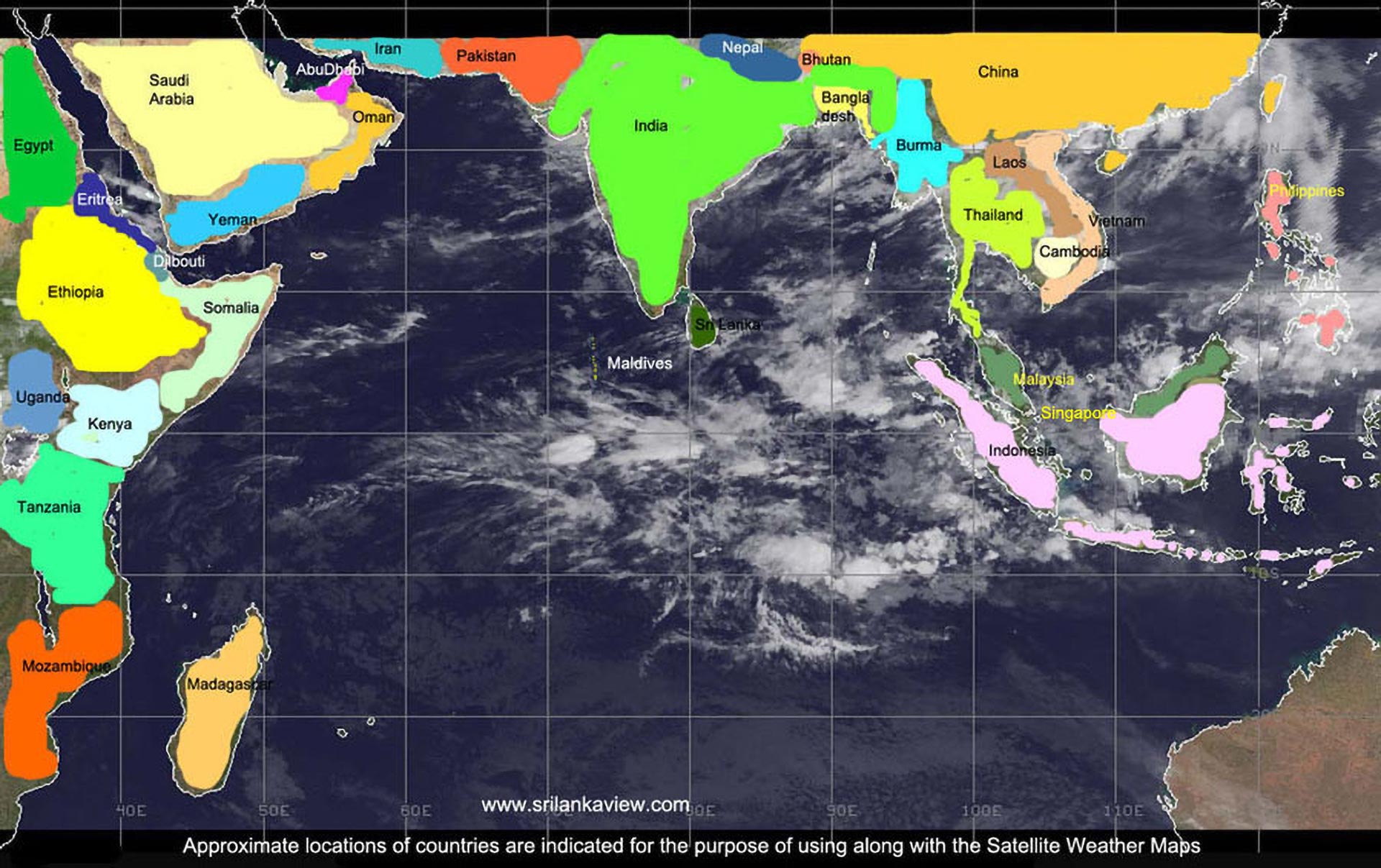
Based on the example map provided with countries marked, you can
easily identify the area you are searching for satellite weather information. Click for the larger map
Find your country in the map
Local Time for the Countries of the region
UTC (Universal Coordinated Time), was previously called as the Greenwich Mean Time and is the local time at Greenwich-England, which is at 0° longitude. Meteosat-8 Images marks the time of the image in UTC. Add the correct Hours and Minutes to the UTC time of the Weather Image to get the Local Time of your region as given in the following list.
Bangladesh + 6.00 Hours
Bhutan + 6.00 Hours
Burma + 6.30 Hours
Cambodia + 7.00 Hours
Egypt + 2.00 Hours
Eritrea + 3.00 Hours
Ethiopia + 3.00 Hours
India + 5.30 Hours
Indonesia Central + 8.00 Hours
Indonesia Eastern + 9.00 Hours
Indonesia Western + 7.00 Hours
Kenya + 3.00 Hours
Madagascar + 3.00 Hours
Malaysia + 8.00 Hours
Maldives + 5.00 Hours
Mozambique + 2.00 Hours
Nepal + 5.45 Hours
Pakistan + 5.00 Hours
Saudi Arabia + 3.00 Hours
Singapore + 8.00 Hours
Sri Lanka + 5.30 Hours
Tanzania + 3.00 Hours
Thailand + 7.00 Hours
UAE + 4.00 Hours
Vietnam + 7.00 Hours
Yemen + 3.00 Hours
Reading a Satellite Weather Map
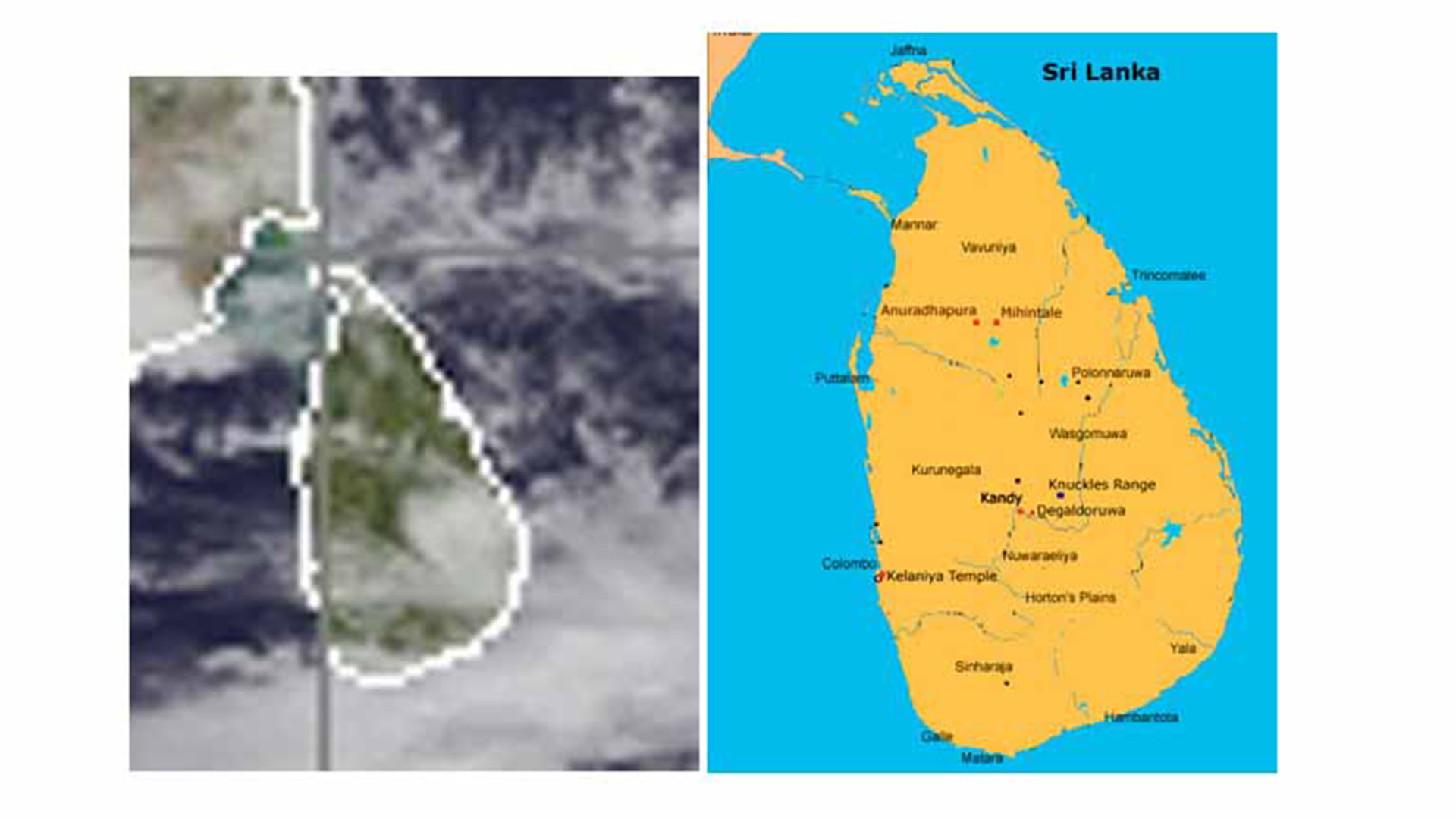
Identify the rain clouds on the map. Click for the larger map
If you are unfamiliar with Satellite Weather maps, the following example
reading may be of help to identify the rain clouds on the map.
Example
reading from an enlarged Sri Lanka map obtained from a Satellite Weather
Image
The
enlarged Sri Lanka map can be seen here with India in the north west direction
and blue coloured Indian Ocean surrounding the island.The cloud like formation
appearing in white is the probable rain clouds covering the south east
section of the island.
A bigger cloud formation is already at the southern
section of the island so the rain cloud activity will be there for the
southern part of the island for few more hours. The island is 268 miles
lengthwise and 139 miles across at it's maximum width.
We can know the
wind speeds from the data maps provided and can assume roughly how much
time a rain cloud covers the territory or the approach of a rain cloud
and also a rough idea of the rain cloud size, compared to the size of
the island.
Asian, Middle Eastern and East African Regions Weather Maps from Satellite Images of Insat3D, Meteosat-8 and Windy.com
Asia Weather
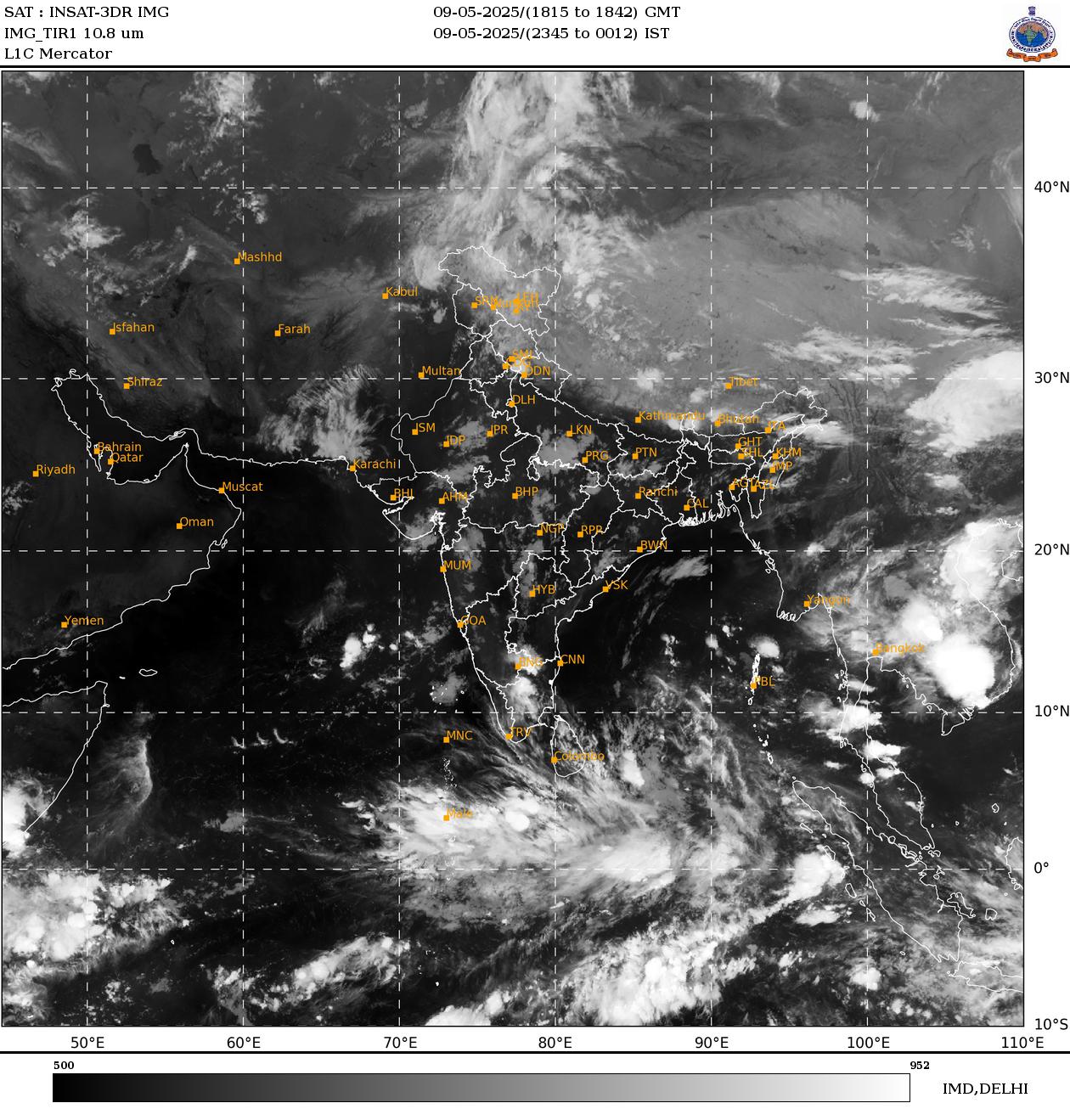
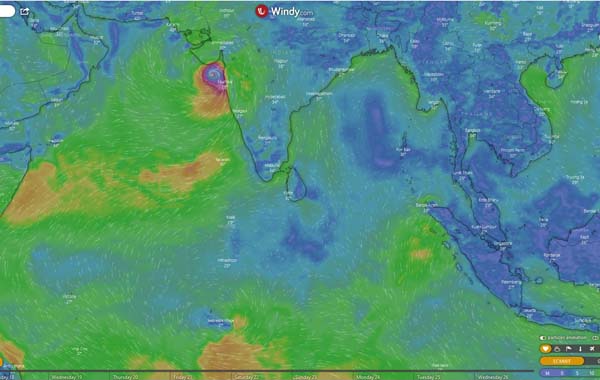
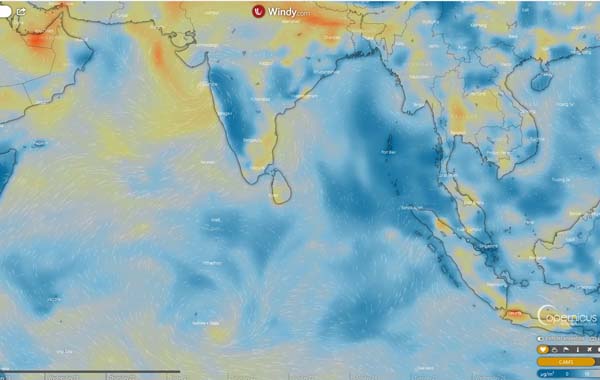
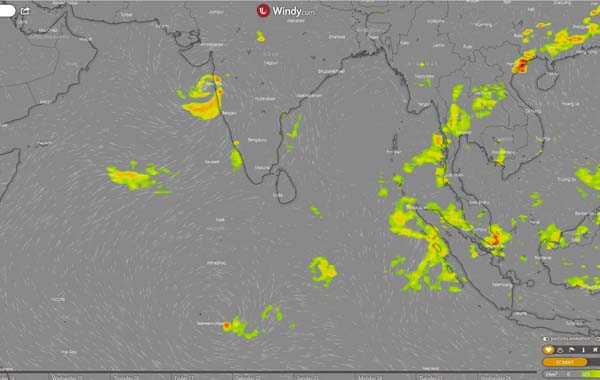
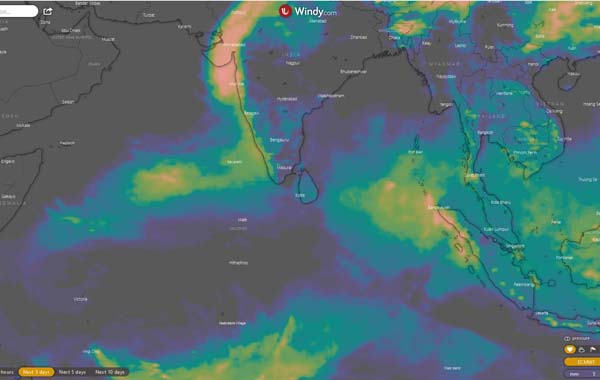
For making you more informative on the region's weather conditions, this information page was created, making use of linking Weather Maps and Satellite Weather Images by METEOSAT-8, Indian Insat 3D satellite and Windy.com.
A basic knowledge on how to identify the rain clouds on a map showing Asian, Middle Eastern and East African Regions and the Indian Ocean, will enable the visitor to know exact weather conditions at the moment and the possible weather pattern for today,tomorrow or the next week also.
Example maps with readings are given for easy understanding. Anyone like to study the topic in detail can visit the Web sites of University of Wisconsin-Madison Space Science and Engineering Center and Indian Meteorological Department's web sites which opens up for Weather maps linked here. The latest addition is the link to Windy.com enabling to provide the state-of-the-art imagery of weather information covering the Indian Ocean region. Local weather reports of Sri Lanka cities are provided by links of Yr which is a joint service by the Norwegian Meteorological Institute and the Norwegian Broadcasting Corporation.
These enables Srilankaview website to present updated Asia Weather satellite image maps of today for the audience from weather satellites and institues concerned.
Learn to self analyze the Sri Lanka Weather Map from Satellites to obtain an accurate Weather Report by yourself, just by going through this tutorial. Its so easy.
Example reading from an enlarged Sri Lanka weather map obtained from Satellite Weather Image
The enlarged Sri Lanka map can be seen here with India in the north west direction and blue coloured Indian Ocean surrounding the island.The cloud like formation appearing in white is the probable rain clouds covering the south east section of the island. A bigger cloud formation is already at the southern section of the island so the rain cloud activity will be there for the southern part of the island for few more hours. The island is 268 miles lengthwise and 139 miles across at it's maximum width. We can know the wind speeds from the data maps provided and can assume roughly how much time a rain cloud covers the territory or the approach of a rain cloud and also a rough idea of the rain cloud size, compared to the size of the island.
Satelite map of Sri Lanka enlarged Sri lanka map with towns
Weather Satellites
Travel Video on Sri Lanka by Suitcase Monkey
Click Video Button to watch
SriLankaView's Choice
This is Kalkuda Beach
The 777,000 kM Toyota
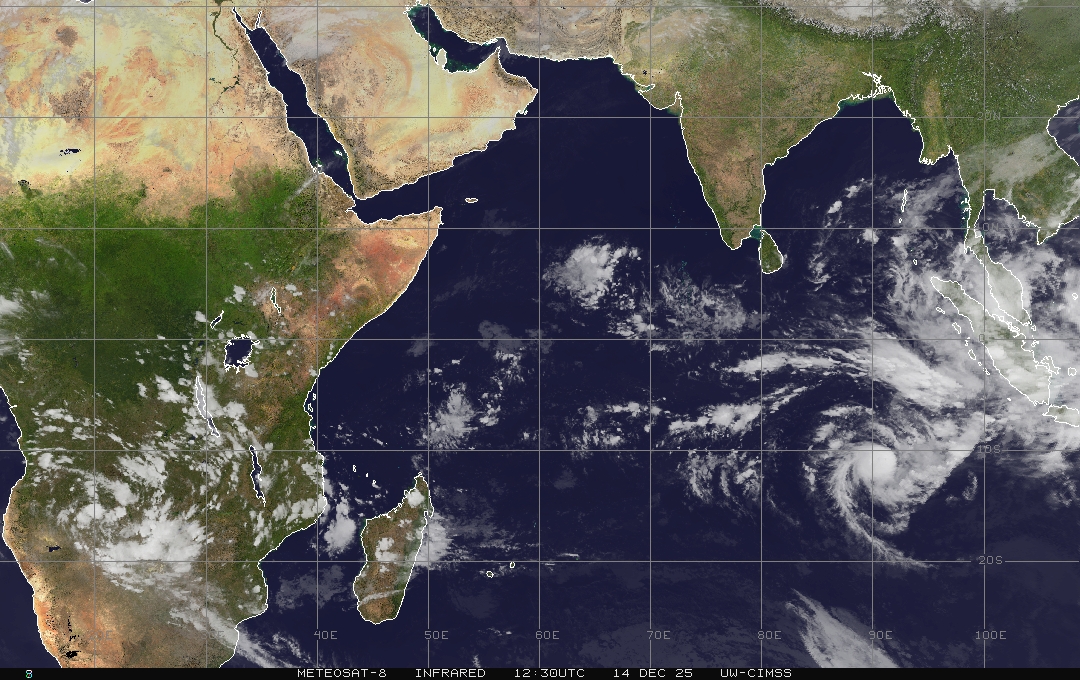
METEOSAT-8 Satellite's Infra Red Weather Map
UTC (Universal Coordinated Time), was previously called as the Greenwich Mean Time and is the local time at Greenwich-England, which is at 0° longitude. Meteosat-8 Images marks the time of the image in UTC. Add Hours and Minutes as per the table to the UTC Time to get the Local time of your country to the time of the image.
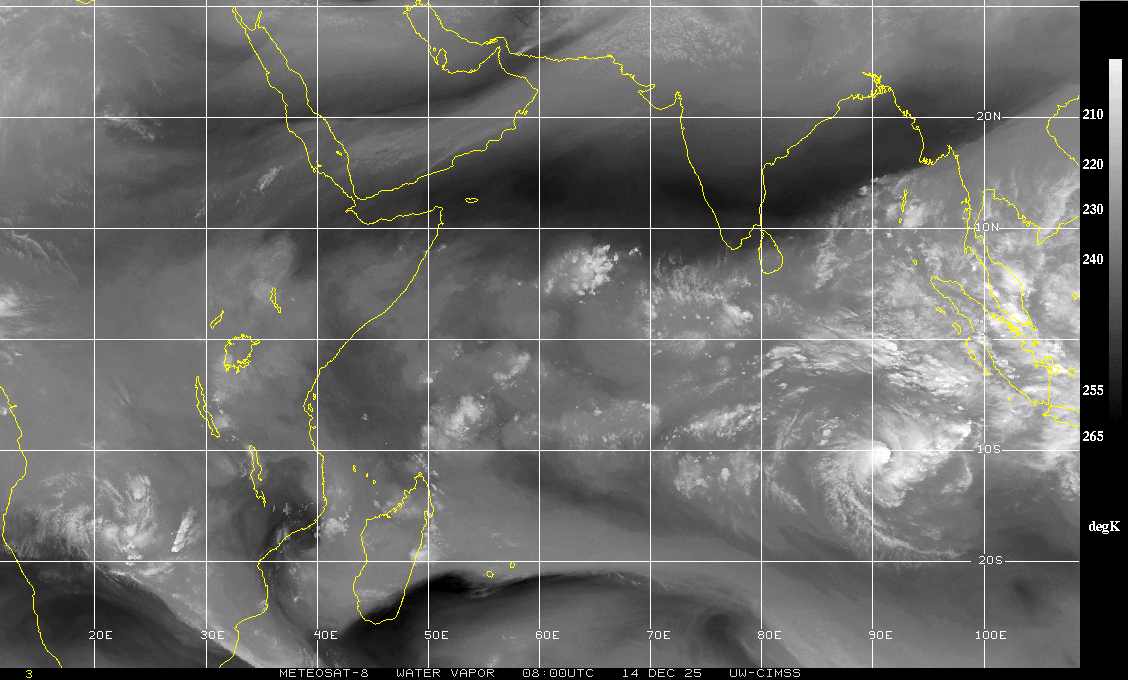
METEOSAT-8 Satellite's Water Vapor Weather Map
Normally water vapor images show how moist or dry the middle and upper atmosphere is. The air circulation in the middle and upper atmosphere also can be noticed Water Vapor images can be taken during daytime only. Infra Red images can be taken any time of the day.
Wind Maps ( AMV) for forecasting Sri Lanka Weather-
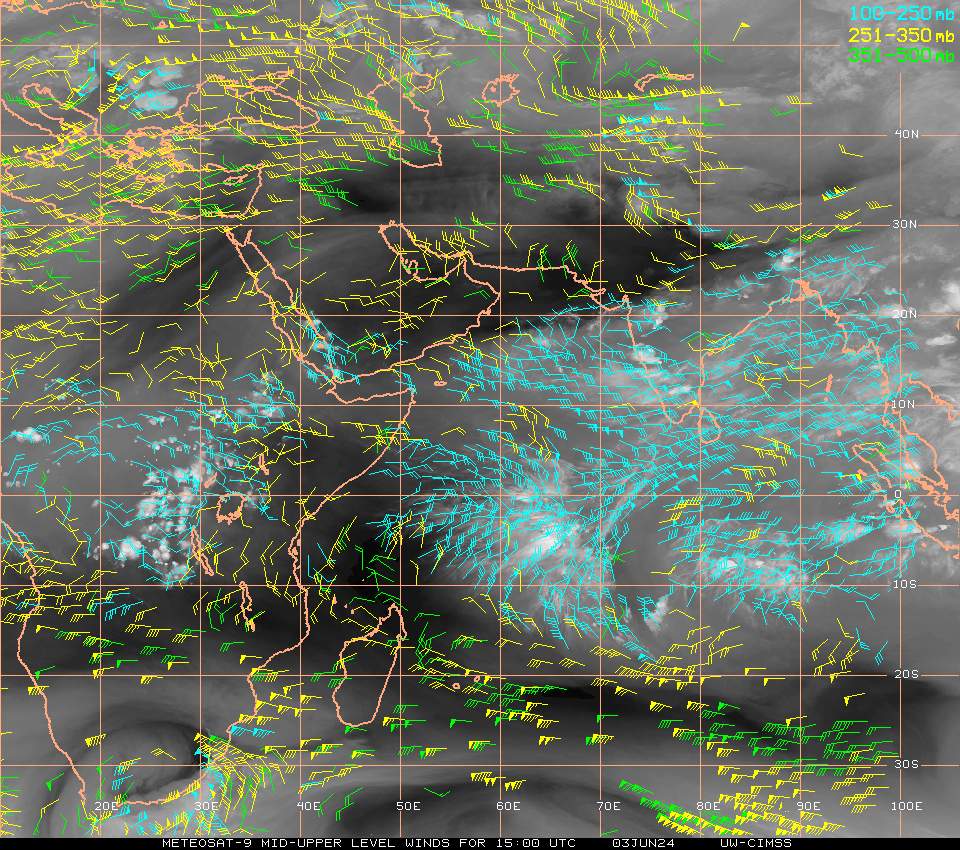
Upper Level Winds from Meteosat-8
Atmospheric Motion Vectors (AMV) indicate winds in Upper layers of the atmosphere. The photo shows wind effects of 3 layers of the atmosphere by the three colours used. The blue colour is for winds in the region [100-250 mb pressure] , corresponding to 45000 feet and 34000 feet above sea level. The yellow colour is for winds in the region [251-350 mb pressure] corresponding to 34000 feet and 26500 feet above sea level. The green colour is for winds in the region [351-500 mb pressure] corresponding to 26500 feet and 18000 feet above sea level. These are helpful to notice concentrated Upper Level Divergence of the Winds.
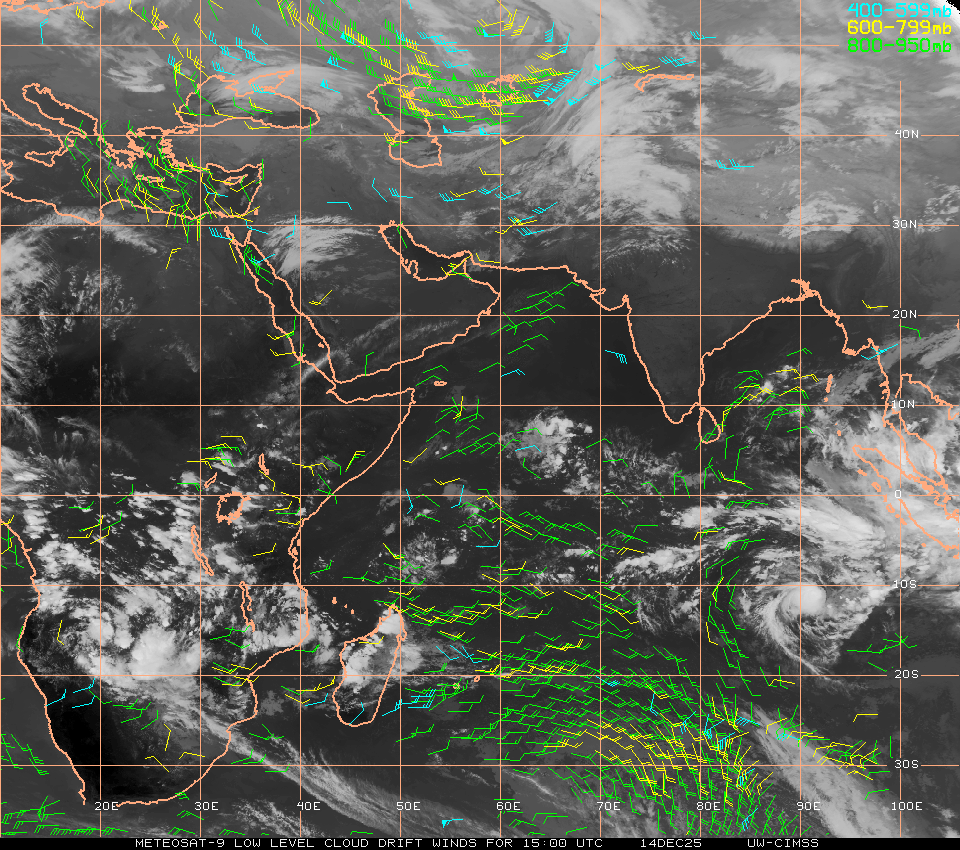
Lower Level Winds from Meteosat-8
Atmospheric Motion Vectors (AMV) indicate winds in Lower layers of the atmosphere. The photo shows wind effects of 3 layers of the atmosphere by the three colours used.The blue colour is for winds in the region [400-599 mb pressure] , corresponding to 20000 feet and 14000 feet above sea level. The yellow colour is for winds in the region [600-799 mb pressure] corresponding to 14000 feet and 6000 feet above sea level. The green colour is for winds in the region [800-950 mb pressure] corresponding to 6000 feet and 1500 feet above sea level.These are helpful to notice concentrated Lower Level Convergence of the Winds.
Wind Shear (color)-
150-300mb layer mean minus-
700-925mb layer mean
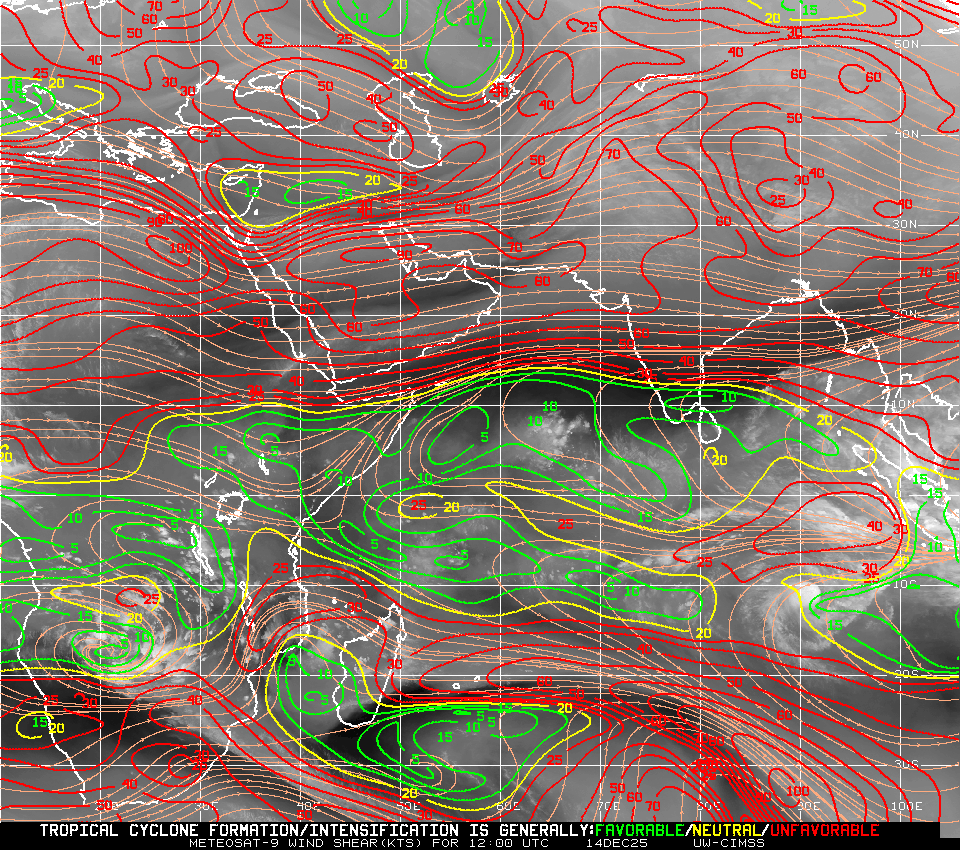
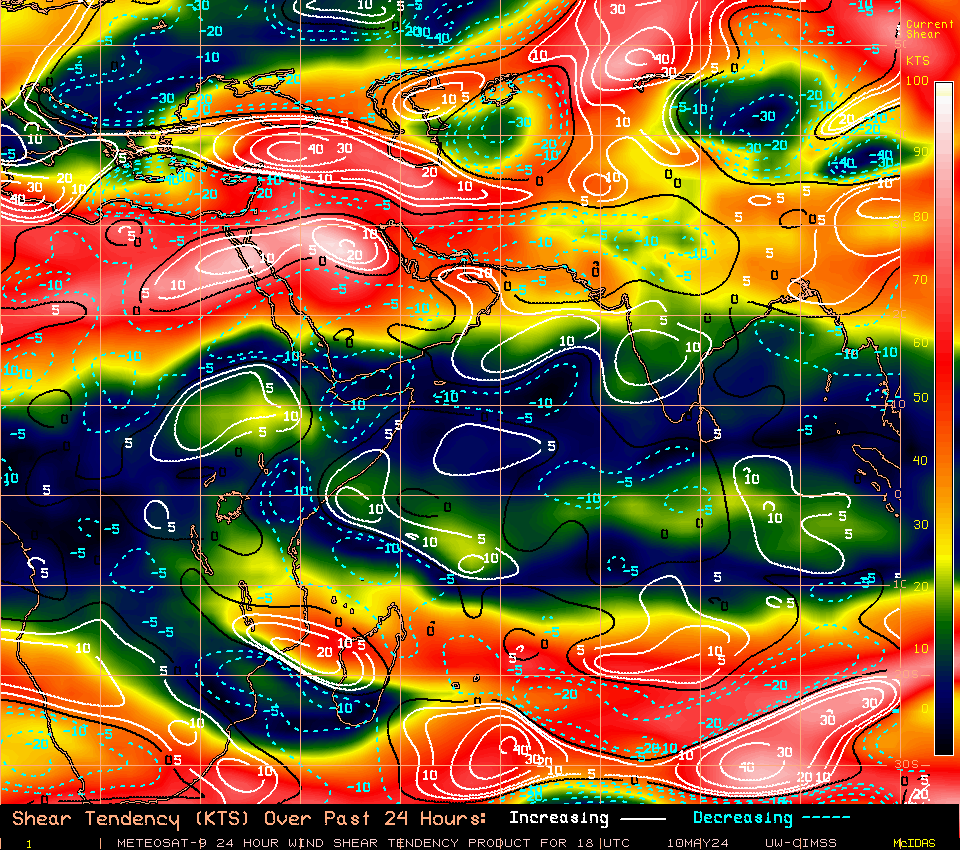
Wind Shear charts come in handy when there is Tropical Cyclone activity in the region. Wind Shear is the net result of the change of speed or direction of wind speed along a straight route of its travel and the result is given in Knots.Here the Upper Wind is taken at a range of 150-300 mb range which corresponds to an average of about 40,000 feet above sea level and the Lower Wind is taken at a range of 700-925 mb range which corresponds to an average of about 5000 feet above sea level. Low Wind Shear Values of around 5 knots are bad if they appear near Cyclone or Hurricane activity, since low values can intensify the activity of the Cyclone. Higher figures like 40 Knots or more will dissipate the Hurricanes power and makes it less destructive. The Coloured Bar at the right indicates the corresponding Wind Shear values in Knots, which in turn shows Hi and Lo Wind Shear Values in the whole region.
Wind Shear-
150-300mb layer mean minus-
700-925mb layer mean
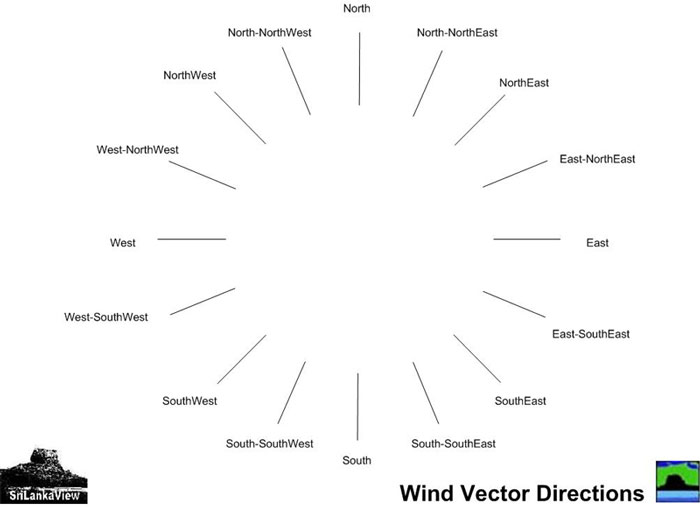
Wind Shear charts come in handy when there is Tropical Cyclone activity in the region. Wind Shear is the net result of the change of speed or direction of wind speed along a straight route of its travel and the result is given in Knots.Here the Upper Wind is taken at a range of 150-300 mb range which corresponds to an average of about 40,000 feet above sea level and the Lower Wind is taken at a range of 700-925 mb range which corresponds to an average of about 5000 feet above sea level. Looking carefully at the Chart will show you the land mass demarcated in White which shows, Sri Lanka, India, South East region ,the Gulf and a part of Africa. Yellow contours indicate the corresponding numerical value in Knots of Wind Shear in that area.The direction of the Shear is indicated by the arrow directions of the Pink lines. Normally it is an indication of the Upper Level wind direction also.
Wind Shear Tendency-
24 hour change in
shear magnitude
This map indicates the trend of the Wind Shear valves, by indicting in contours of White solid lines, the trend of the incremental values in Knots and by Blue dashed lines, the tendency of decreasing values of the Wind Shear in Knots.
Upper Level Divergence-
150-300mb layer mean
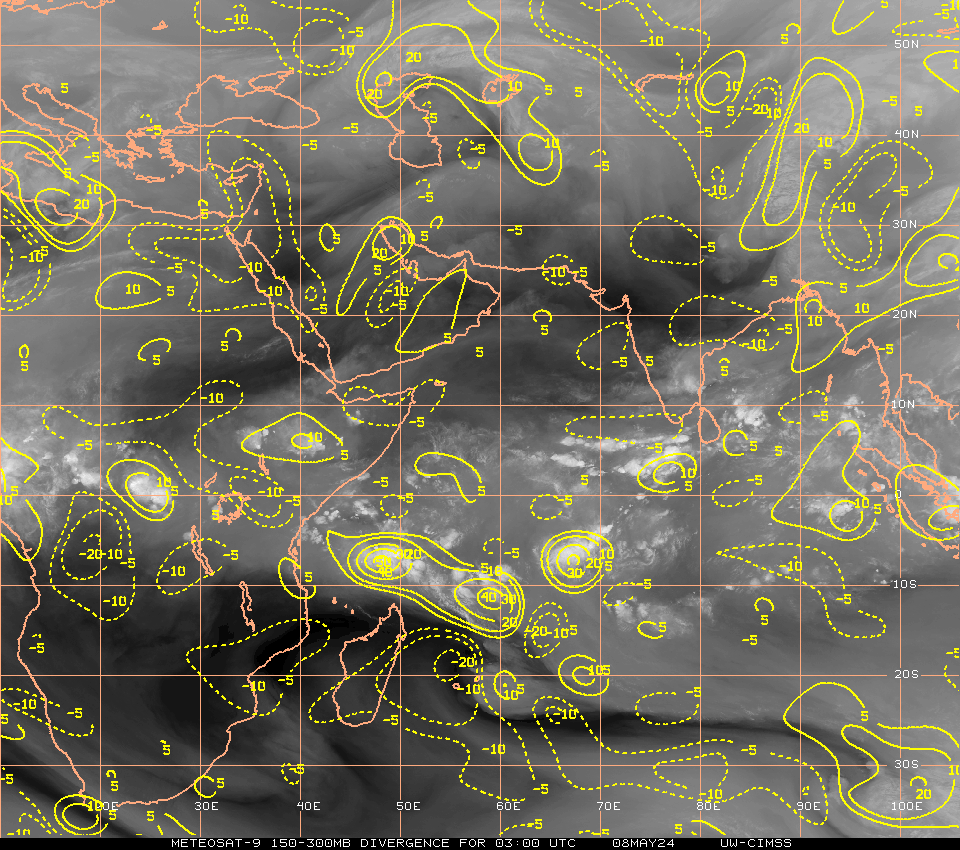
This map shows the Upper level of the troposphere , around 40,000 feet up from the sea level. Moving away from a common point to different other directions can be explained as Divergence. The Wind coming up from the Lower Level Convergence rushes up and In the Upper layer, they move away to other directions. If there are concentrated rings like contours, which also in the same placement of a concentrated Lower Level Convergence, then there is a possibility of a formation of a Tropical Storm or a Hurricane. Increasing values are given in solid Yellow contours and decreasing values are given in dashed Yellow contour lines.
Lower Level Convergence-
850-925mb layer mean
This map shows the Lower level of the troposphere , around 5000 feet up from the sea level. Coming closer to a common point can be explained simply as Convergence. The air at lower level gets concentrated to a smaller area and moves upwards in this instance. In the Lower layer , if there are concentrated rings like contours, which also in the same placement of a concentrated Upper Level Divergence, then there is a possibility of a formation of a Tropical Storm or a Hurricane. Increasing values are given in solid Blue contours and decreasing values are given in dashed Blue contour lines.