Horton Plains National Park of Sri Lanka with a Cloud Forest and Wet Patana Grassland
Directions to Horton Plains National Park, Opening Hours and Ticket Price

Horton Plains National Park is located in the Central Province of Sri Lanka, within the Nuwara Eliya District. Horton Plains can be accessed by both road and rail. The most common approach is by road, either from the north via Pattipola or from the south via Ohiya. If traveling by train, visitors can disembark at either Pattipola or Ohiya and walk the rest of the way or arrange local transportation. Please note that there is no public transport available along the road that runs through the national park. An entrance fee is charged for visitors and vehicles entering the park. From Horton Plains Far inn Information Centre it is 32 km to NuwaraEliya, 11 km to Pattipola, 34 km to NanuOya, 11 km to Ohiya, 35 km to Haputale and 54 km to Bandarawela.
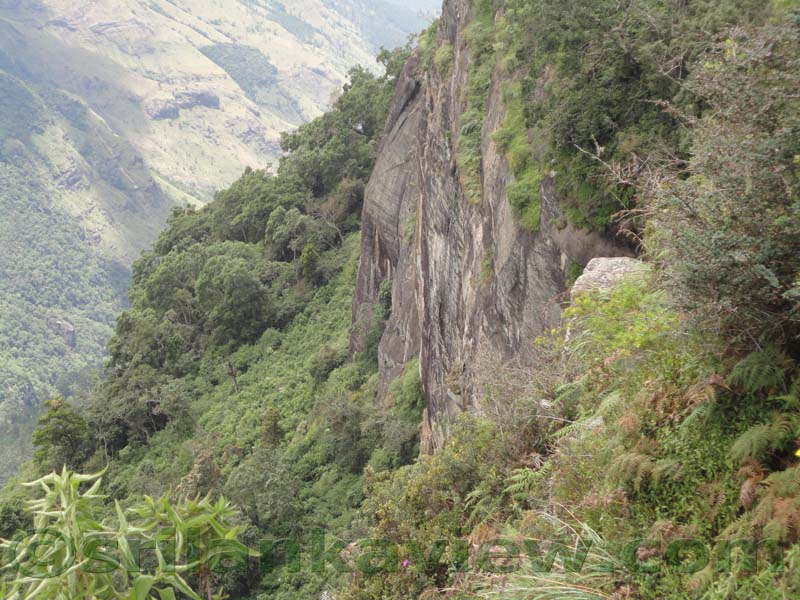
Horton Plains National Park is open 365 days a year, welcoming visitors from 6 AM to 6 PM. Ticket counters at the Pattipola and Ohiya entrances operate from 6 AM to 4 PM. The most attractive feature of Horton Plains is the World's End escarpment of 884 meters. Please note that trekking to Mini World's End, Greater World's End, and Baker's Falls is permitted only from 6 AM to 2 PM. This restriction is primarily for the safety of visitors, as high misty conditions can lead to difficulties in navigation. The 9 km trekking route typically takes about 3 to 3.5 hours to complete, so it's advisable to plan accordingly.
Horton Plains entrance ticket prices vary for non-SAARC foreigners, SAARC foreigners, and local visitors. For foreign visitors, ticket prices are linked to the US dollar rate, meaning they may fluctuate based on the conversion rate between the US dollar and the rupee. Entrance tickets must be paid in cash in Sri Lankan rupees. You can easily find the ticket price for Foreigners and Locals using the details given below.


 Download Horton Plains National Park Ticket Price for Foreigners and Locals
Description of Horton Plains National Park and Geographical information
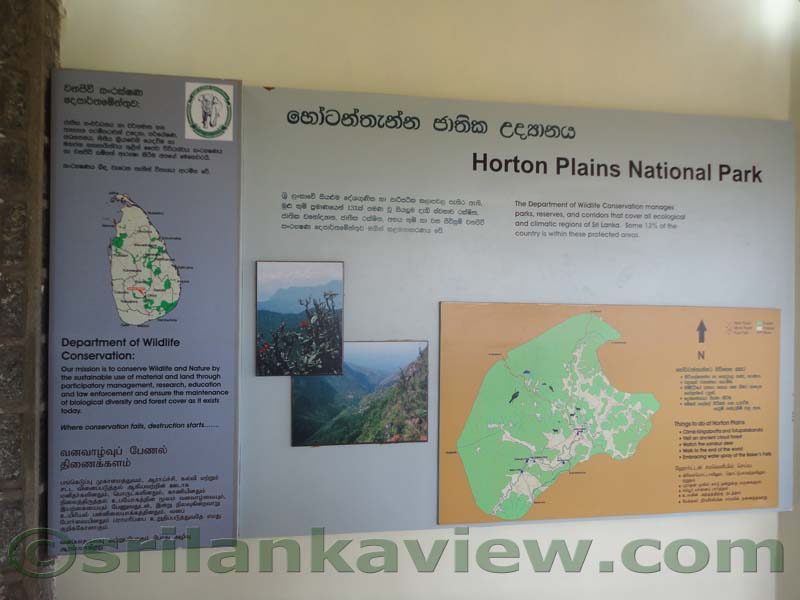
Horton Plains National Park lies at the eastern boundary of the Upper Montane Forest Range, which spans elevations from 1,500 to 2,524 meters above sea level in the Central Highlands of Sri Lanka. The Horton Plains plateau, at a nominal elevation of 2,100 meters, is home to the second and third highest peaks in Sri Lanka: Kirigalpoththa (2,389 meters) and Totupolakanda (2,357 meters).
Covering an area of 3,160 hectares (31.6 square kilometers), Horton Plains constitutes about 8% of the total upper montane forests and grasslands in Sri Lanka. The rainwater from the Horton Plains plateau is drained through tributaries into various rivers: the Mahaveli River to the north (via Uma Oya), the Walawe River to the south (via Belihul Oya and Kiriketi Oya), and the Kelani River to the west (via Bogawantalawa Oya).
Horton Plains receives an average rainfall of around 5,000 mm, while the surrounding areas average 2,540 mm. The park experiences significant rainfall from the northwest monsoon, with monthly rainfall rarely falling below 100 mm throughout the year. The mean annual temperature in the area is approximately 13°C, with daytime temperatures reaching as high as 27°C and dropping to around 5°C at night. Horton Plains is situated 32 km from Nuwara Eliya.
History of Horton Plains Sanctuary

Before British rule, this area was known as Maha Eliya. In the 1820s, the British became aware of this unique natural resource and later renamed it Horton Plains in honor of Sir Robert Horton, the British Governor from 1832 to 1837. Sir Samuel Baker helped popularize the area through his hunting expeditions. Two other British planters, Thomas Farr and H. Anderson, who owned estates near Horton Plains, built lodges to facilitate their hunting activities.
During the British era, the area was protected under the Administration Order of 1873, which prohibited the cutting of forests above 5,000 feet in elevation. Horton Plains was designated as a National Park on March 16, 1988, having previously been classified as a Nature Reserve since December 5, 1969. The Central Highlands of Sri Lanka, which includes Horton Plains National Park, was recognized as a "Mixed Cultural and Natural World Heritage Site" on August 2, 2010.
Flora of Horton Plains
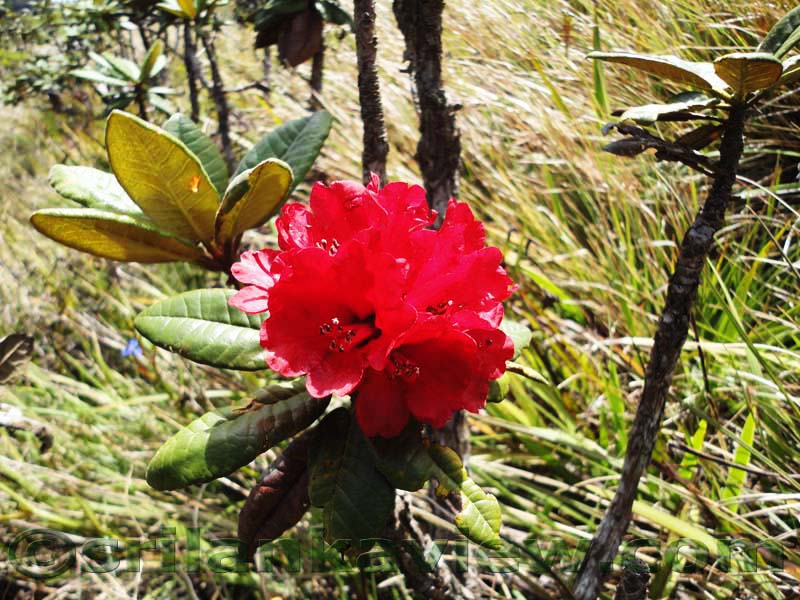
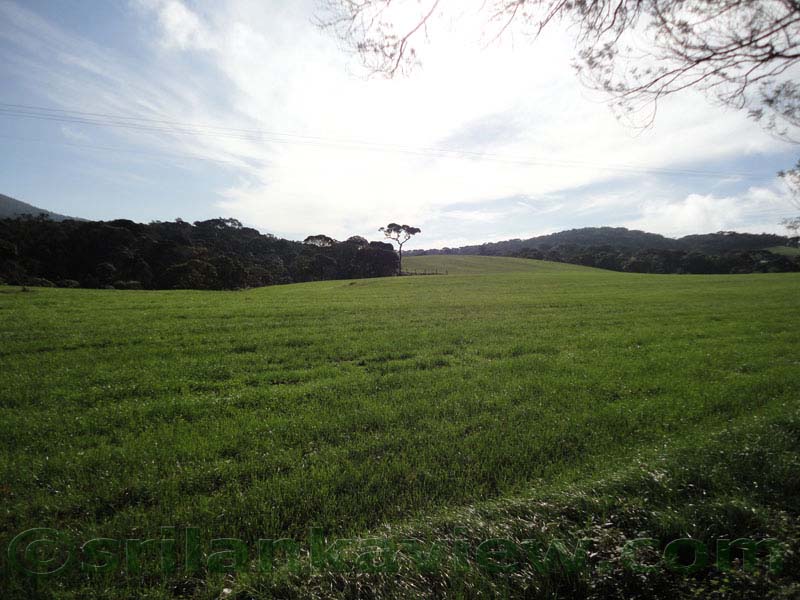
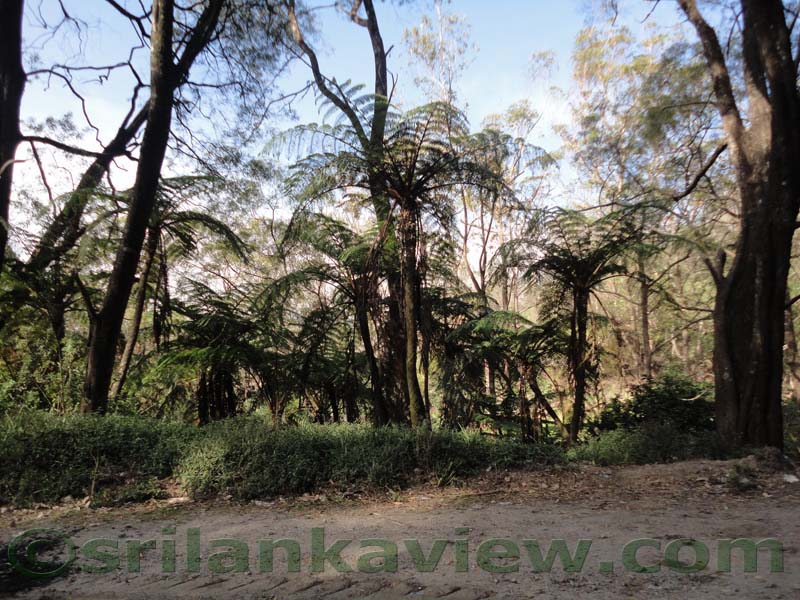
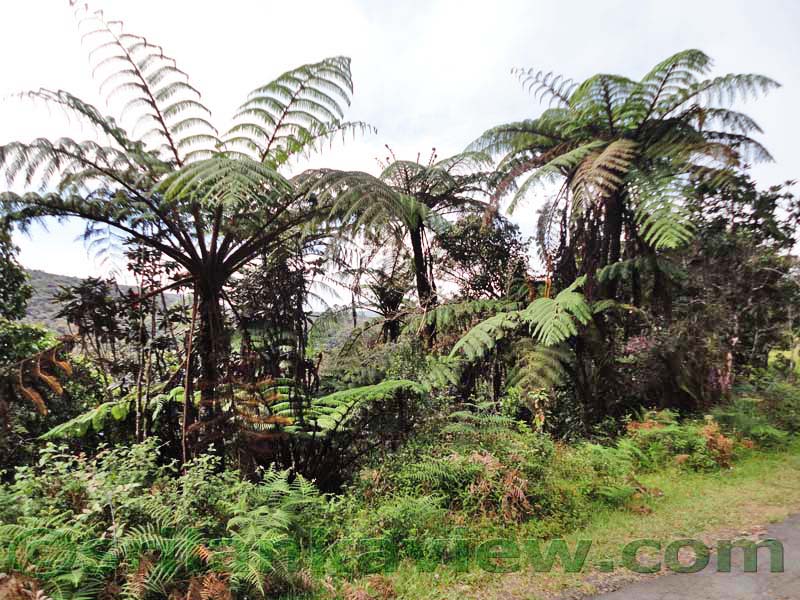
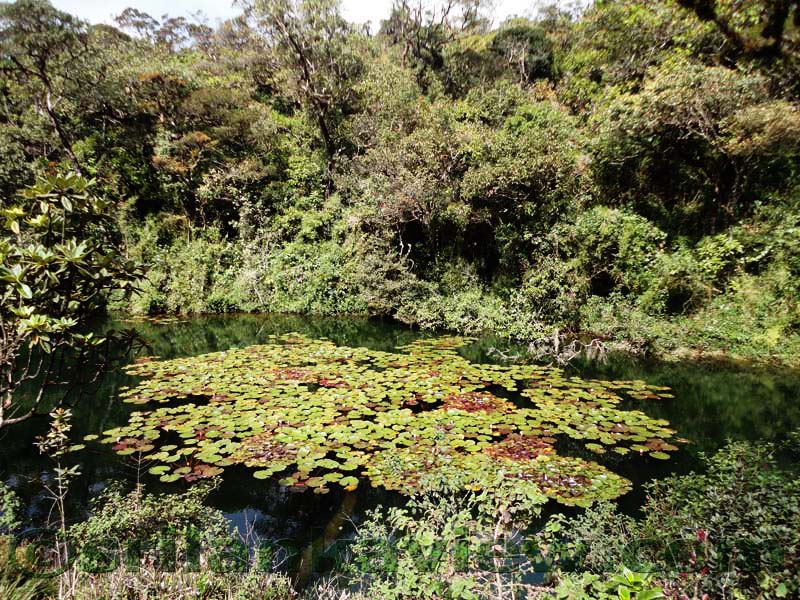
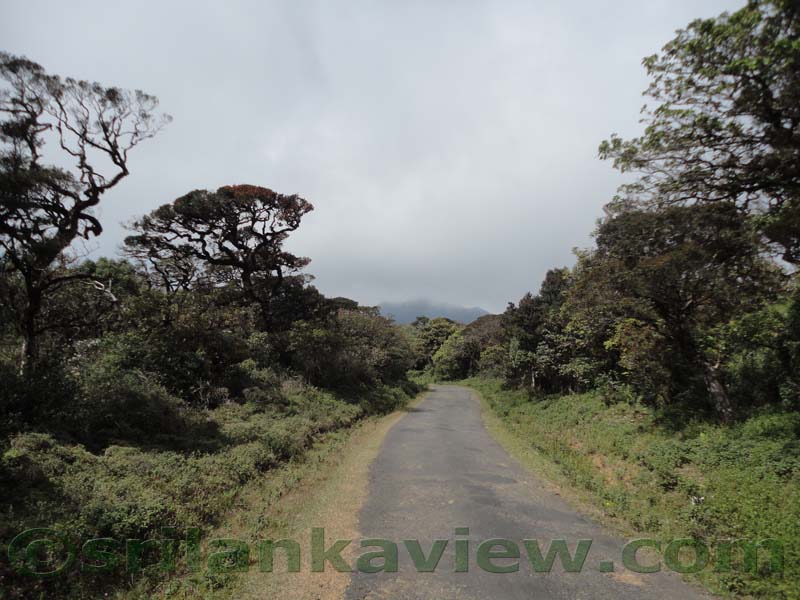
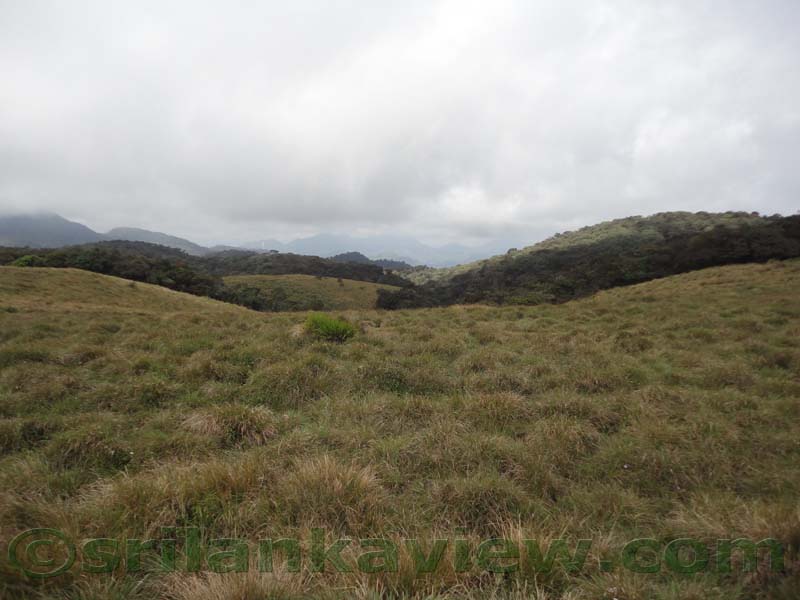
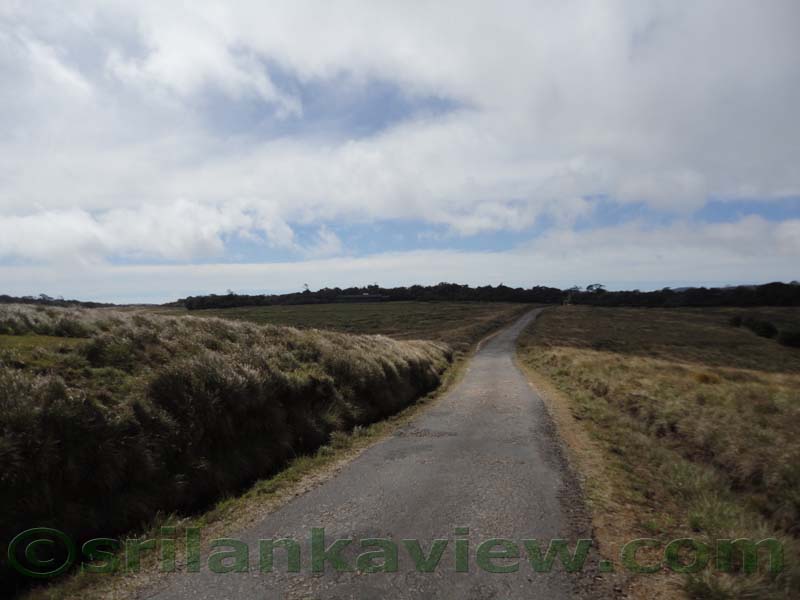
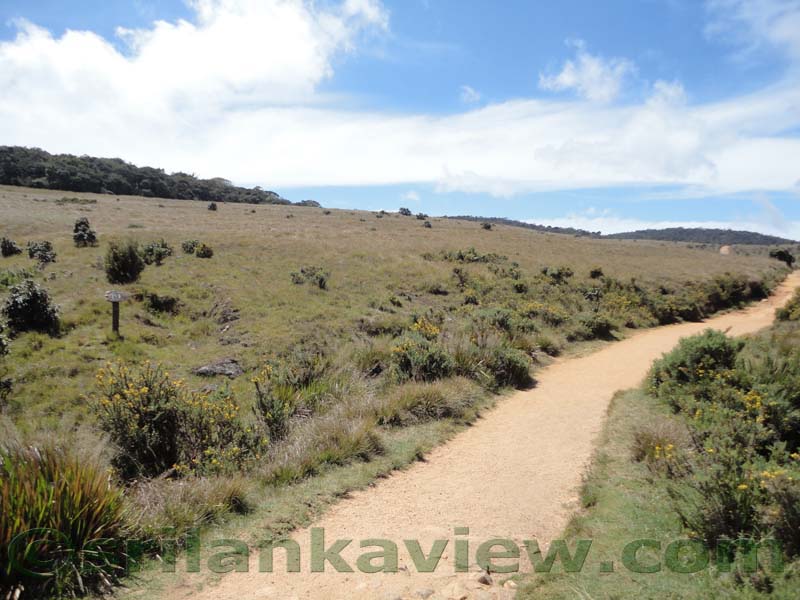
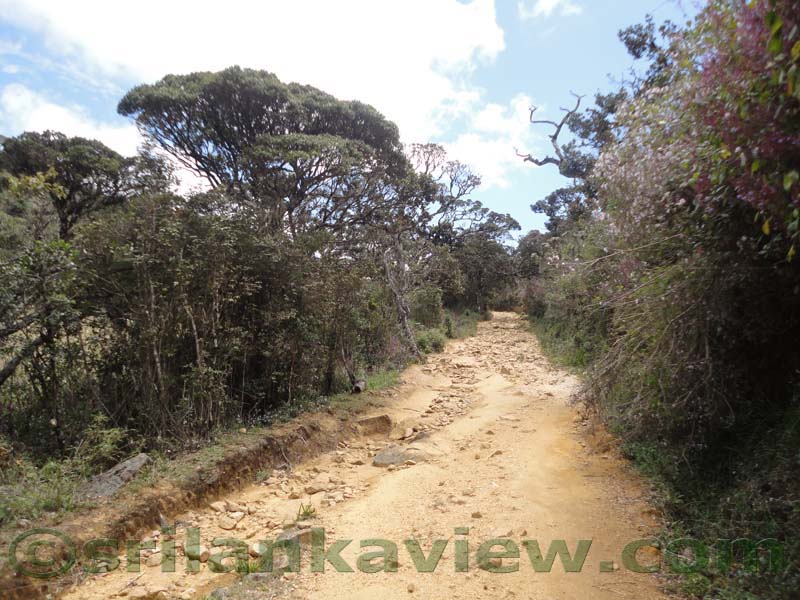
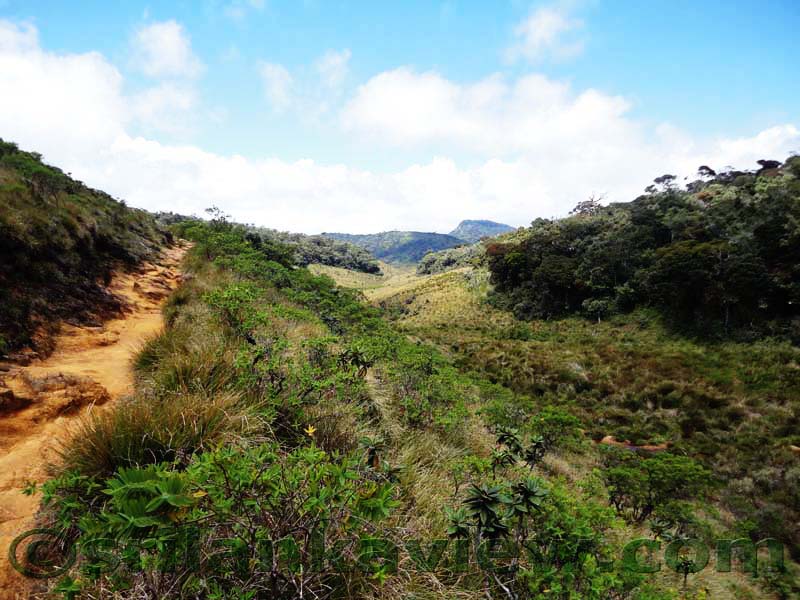
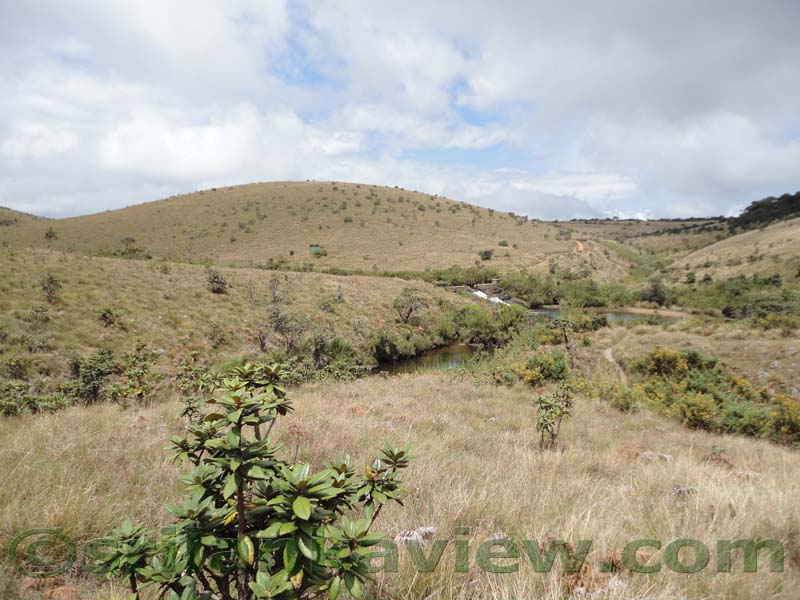
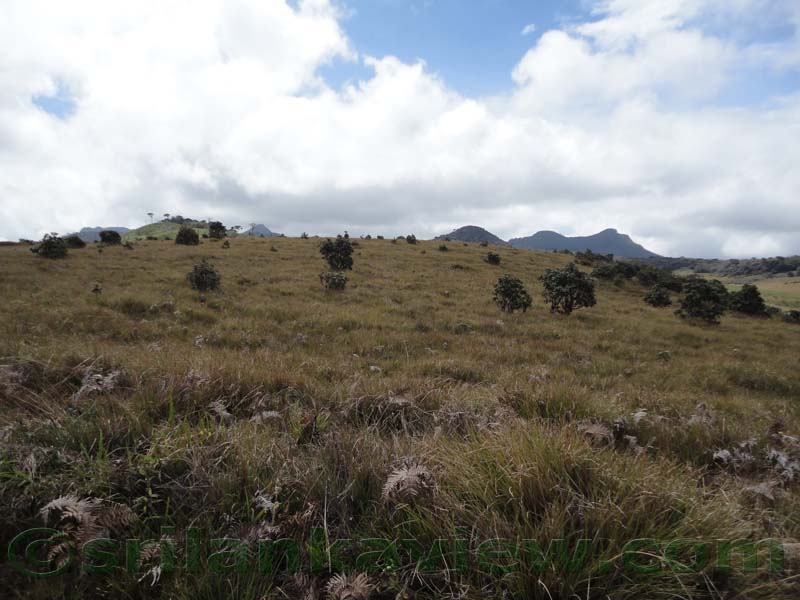
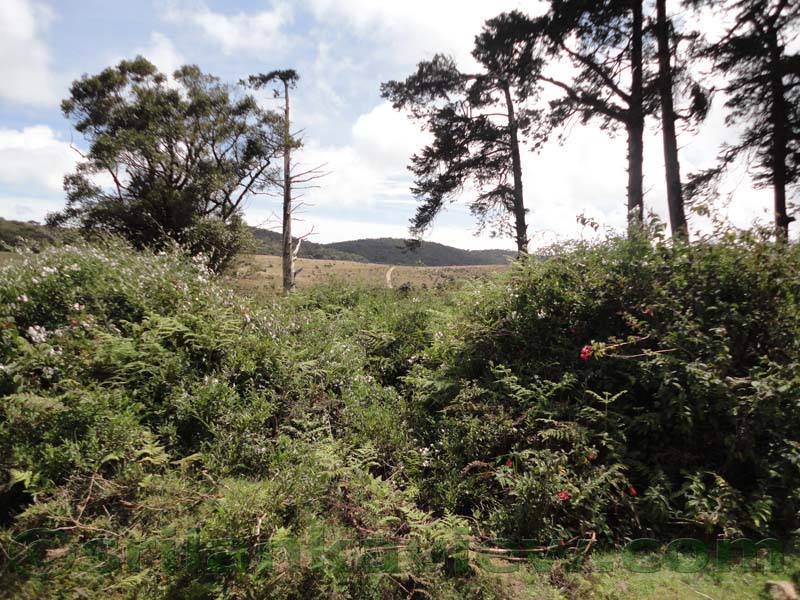
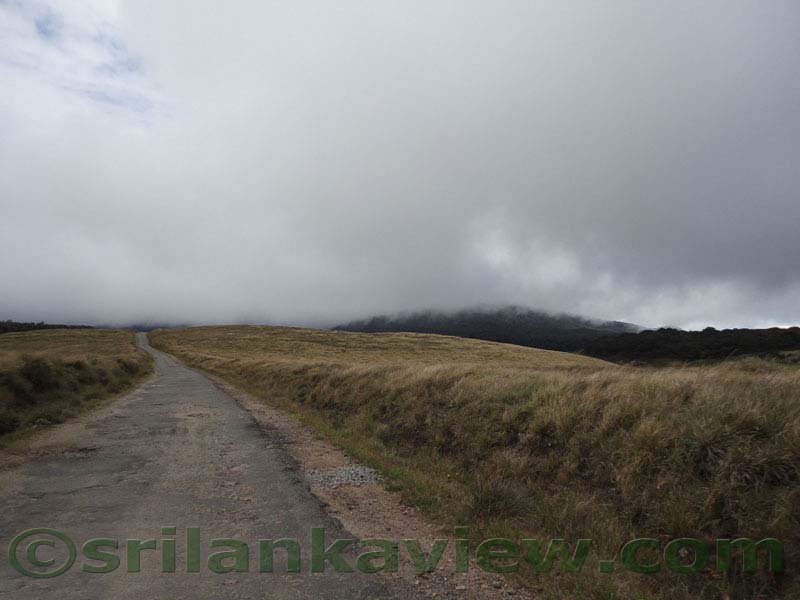
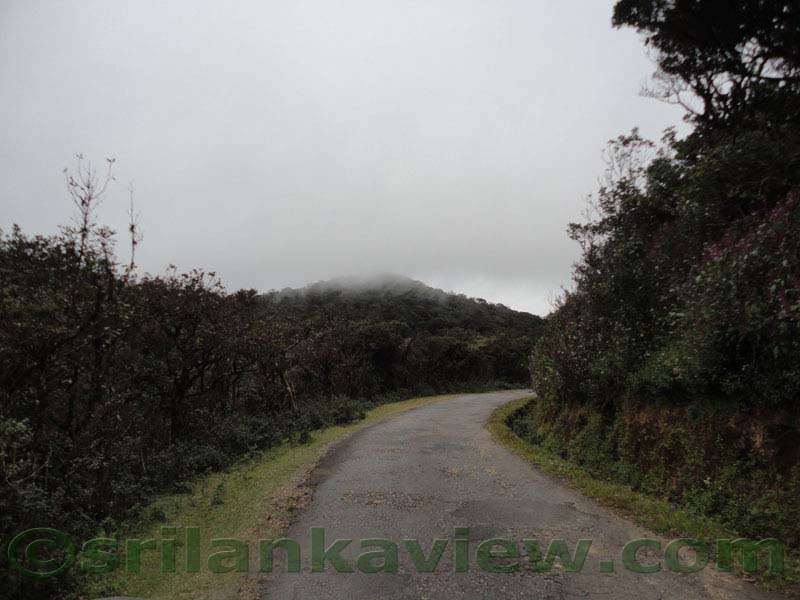
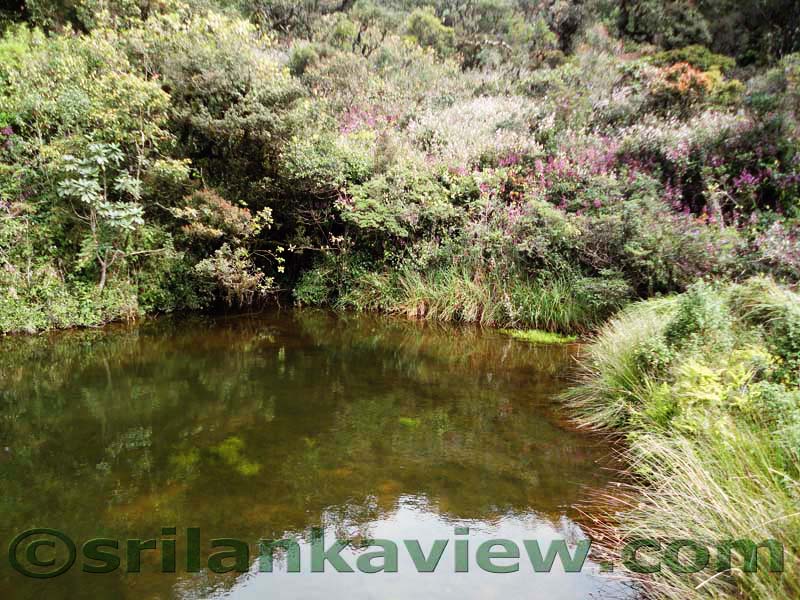
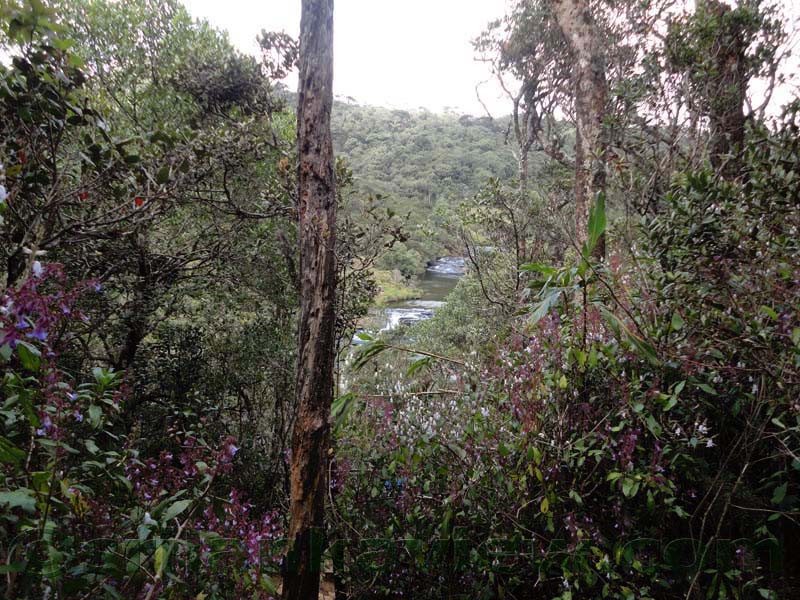
The vegetation of Horton Plains National Park consists of Upper Montane Rain Forests (or Cloud Forests) and Wet Patana Grasslands, with narrow transition zones known as ecotones that feature shrubs and herbs. The lower elevations of Horton Plains are characterized by grasslands, while the upper hills are covered by cloud forests.
Cloud forests cover approximately 39% of Horton Plains, equating to about 1,236 hectares. An additional 30% of the area (about 956 hectares) is classified as die-back cloud forests. The ecotone, or transition area, comprises about 45 hectares, or 1.5% of the total area. The wet grasslands can be further divided into three categories: Dwarf Bamboo, Tussock Grass, and Carpet Grass. Dwarf Bamboo, which is endemic to Sri Lanka, grows exclusively in Horton Plains and covers around 168 hectares (5.4% of the park). Tussock Grass, which is native to the area, occupies approximately 574 hectares (18.4%), while Carpet Grass, which has encroached upon abandoned potato cultivation lands, covers about 64 hectares (2%). This encroachment is attributed to seeds that were introduced with manure during potato cultivation between 1960 and 1977.
A total of 188 plant species have been identified in Horton Plains, of which 63 are endemic to Sri Lanka. While lowland rainforests exhibit significantly higher biodiversity, Horton Plains is unique due to its scarce ecosystem, not found elsewhere on the island. The forest area contains around 57 tree species belonging to 31 families. Additionally, there are approximately 101 flowering plant species at high altitudes, of which 14 are endemic, representing about 20 different families. In total, Horton Plains is home to approximately 188 plant species, 1 fish species, 14 amphibian species, 64 bird species, and 19 mammal species.
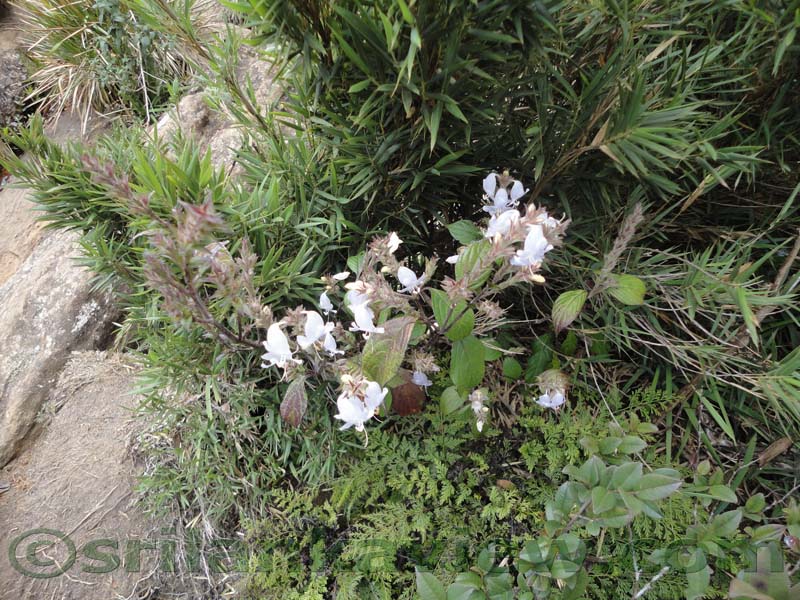
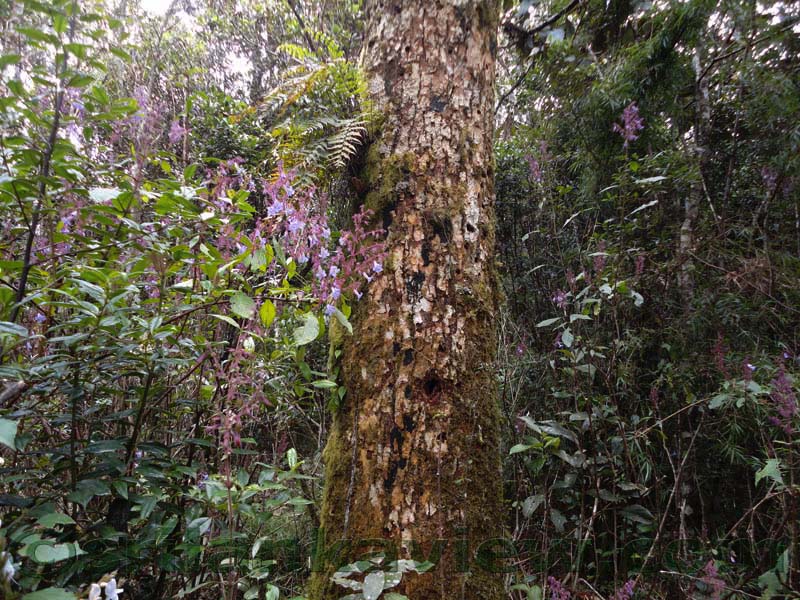
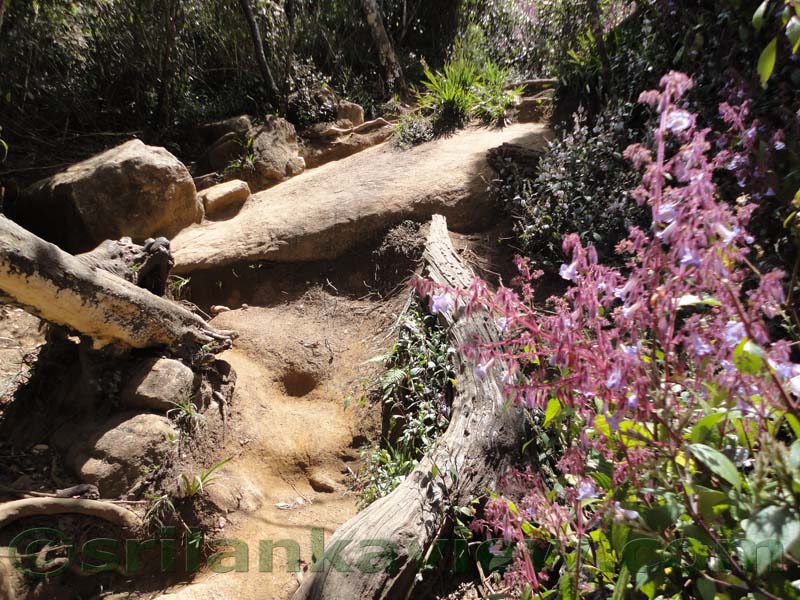
Nelu(in Sinhala) -Strobilanthes Sp. of Horton Plains
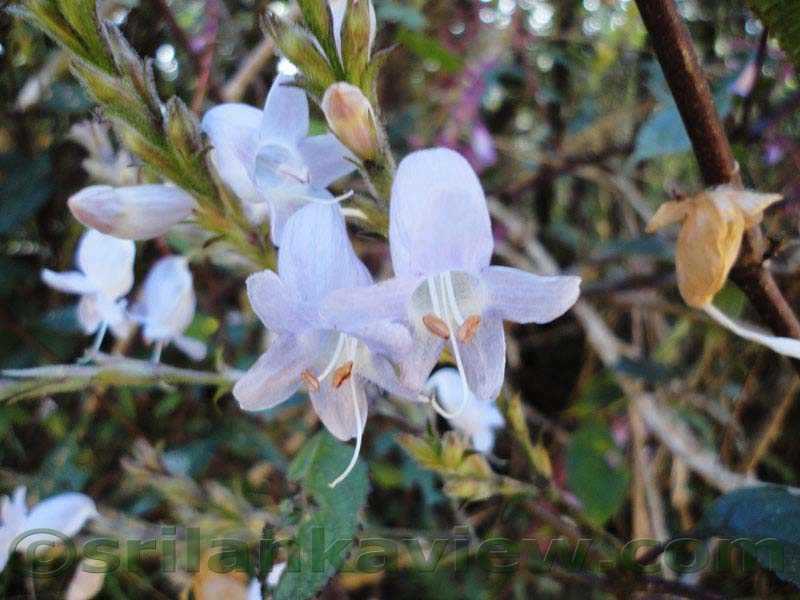
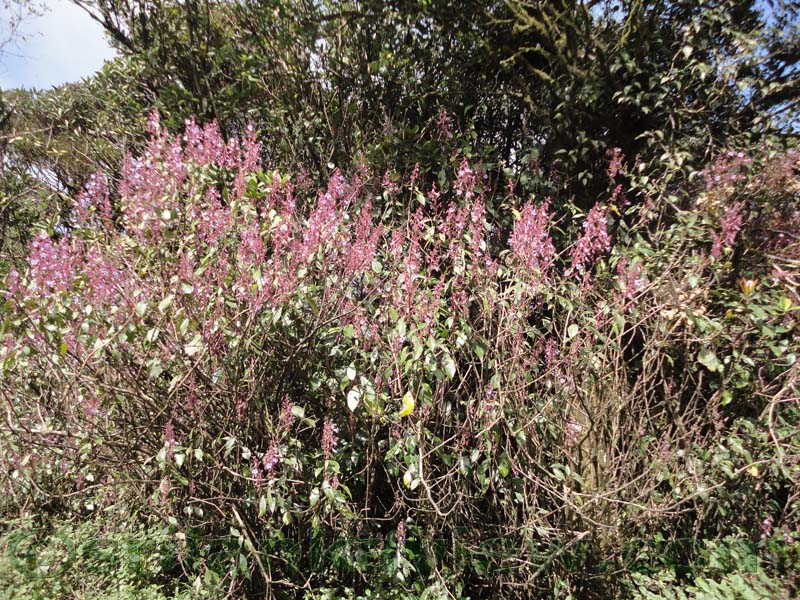
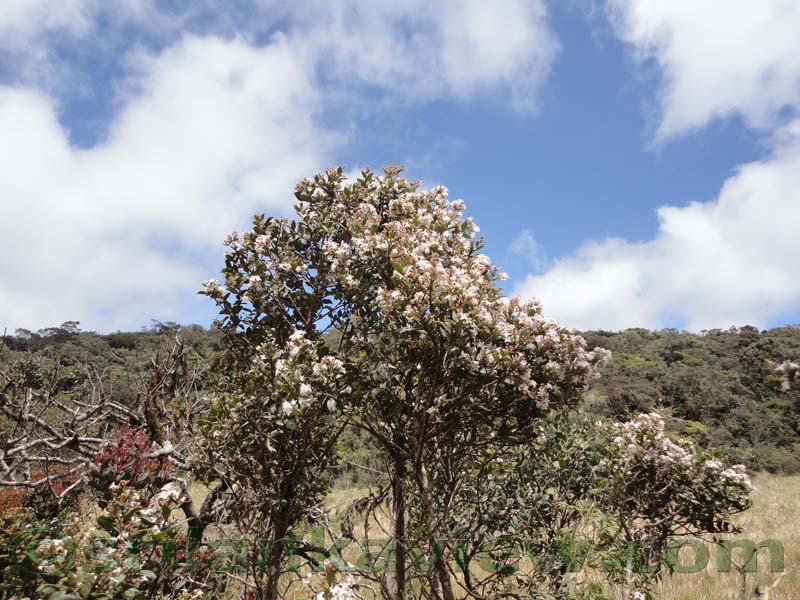
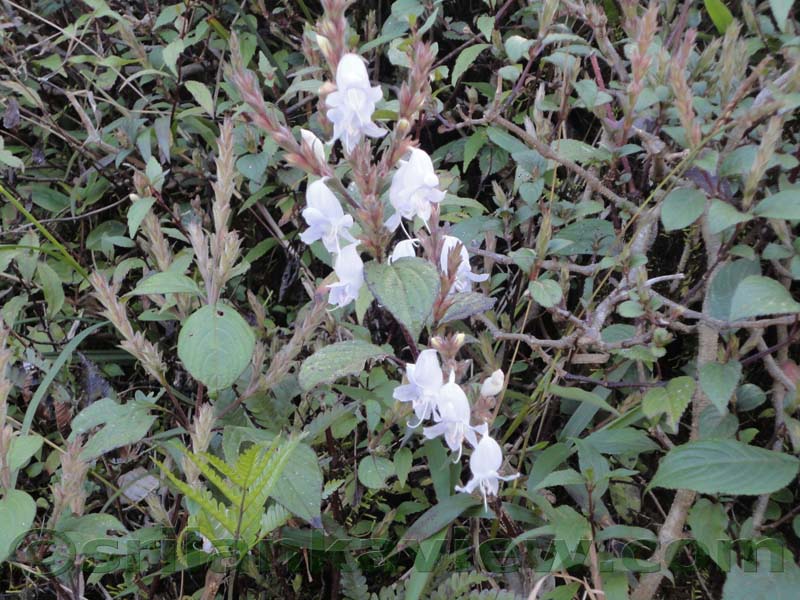
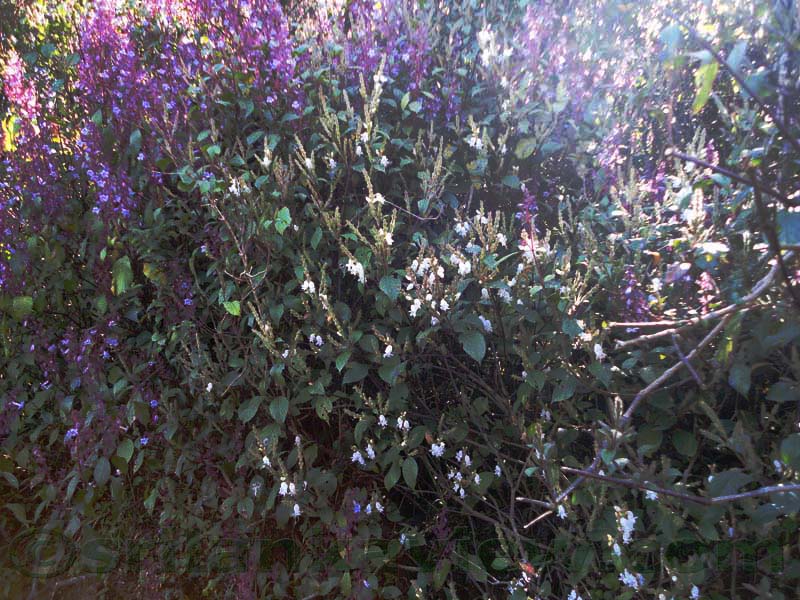
Nelu Flowers (in Sinhala) or Strobilanthes sp. from the Acanthaceae family was abundant during the visit in October 2013. Several varieties of Nelu displayed flowers in different colors, including pink, blue, white, and lemon yellow. This unique flowering plant in Horton Plains blooms only once in its life cycle, which lasts 8 to 11 years. Remarkably, all Nelu plants flower, produce seeds, and die within a specific time frame. The latest Nelu blooming season occurred in September-October 2025, marking a 12-year gap since the last occurrence.
The Nelu species noted in Sri Lanka include:
Strobilanthes calycina
Strobilanthes helicoides
Strobilanthes hookeri
Strobilanthes lupulina
Strobilanthes sexennis
Strobilanthes vestia
Strobilanthes viscosa
Strobilanthes walkeri
Farr Inn - The present Visitor Information Center

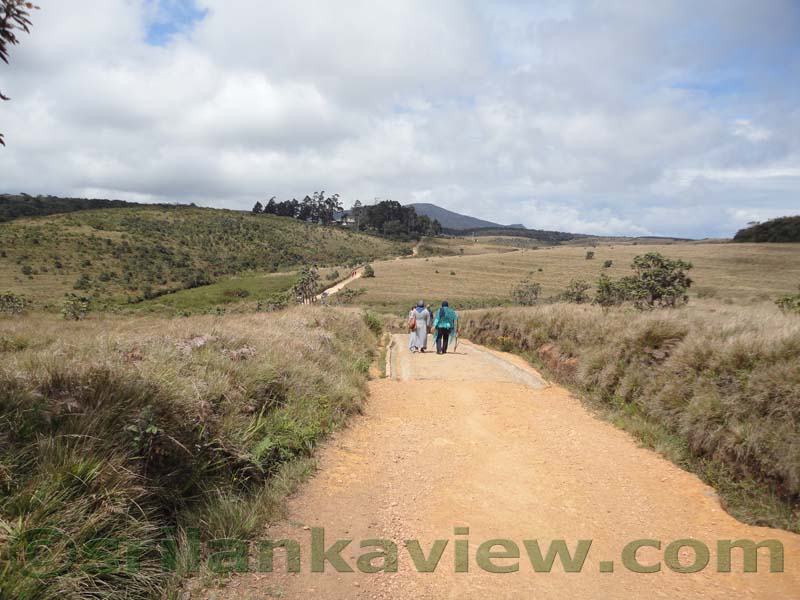
For visitors to Horton Plains, there is a well-maintained nature trail, with the main circuit being the most significant. This trail includes views of Small World's End, Big World's End, Baker's Falls, and Chimney Falls. Additional nature trails lead to Thotupolakanda and Kirigalpoththa.
The main trail begins at Farr Inn, the lodge built by Thomas Farr, which now serves as the Horton Plains Information Center. The trail covers approximately 9 km and takes about 3.5 hours to complete at a leisurely pace, allowing time for photography and sightseeing. The trail is generally easy, except for the section leading to Baker's Falls and back through the cloud forest.
Only eco-friendly materials are permitted in the park, with the exception of plastic water bottles, which must be taken back.
At Horton Plains National Park, several activities and items are prohibited to protect the fragile ecosystem and ensure the safety of both visitors and wildlife. Littering is strictly forbidden, as improper waste disposal can harm the environment and disrupt the natural beauty of the park. Visitors are encouraged to take all their trash with them to help maintain a clean and pristine environment.
Smoking is also prohibited within the park, primarily to prevent fire hazards and maintain the tranquility of the surroundings. Similarly, setting fires, including campfires or any incendiary devices, is not allowed, as it poses a significant risk to the park's vegetation and wildlife.
Loud noises, such as tooting horns or playing radios, are discouraged to preserve the peaceful atmosphere and minimize disturbances to the wildlife. Fishing is not permitted in any of the water bodies, as this helps protect aquatic ecosystems and maintain the park's biodiversity. Additionally, feeding animals is strictly prohibited, as it can disrupt their natural behaviors and lead to dependency on human food, which poses health risks for both animals and visitors.
Bringing hazardous materials, such as chemicals or explosives, into the park is also forbidden to ensure safety for all. Swimming and diving in the park's water bodies are prohibited, primarily for safety reasons, while also protecting the habitats. The discharge of firearms or any shooting activities is strictly banned to safeguard wildlife and ensure the safety of all visitors.
The operation of drones is not allowed within the park, as it can disturb wildlife and detract from the peaceful ambiance. Cycling is prohibited on park trails to protect the delicate terrain and ensure the safety of those on foot. Additionally, pets are not allowed, as they can pose a threat to both wildlife and the natural environment.
Finally, the consumption of alcohol is not permitted within the park to maintain a respectful and safe atmosphere for all visitors. By adhering to these prohibitions, guests can help preserve the natural beauty of Horton Plains National Park and ensure a safe and enjoyable experience for everyone.
The Farr Inn, now the Visitor Center, offers visitors a wealth of interesting information and publications related to Horton Plains.
Main Trail at Horton Plains National Park

The entrance to the Main Trail begins at the Park Entrance Watch Post, where a single pathway leads across the Red Bridge and continues to the signpost at the "Y" turnoff junction.
The Red Bridge
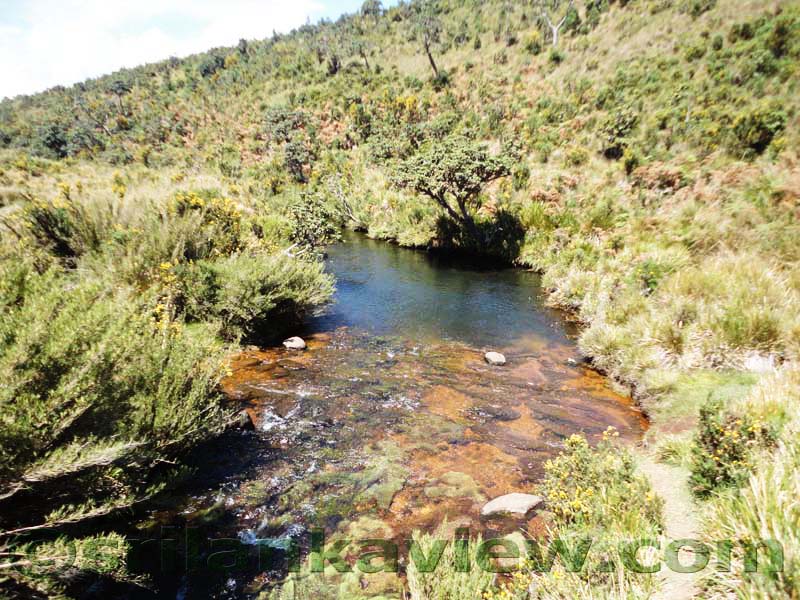
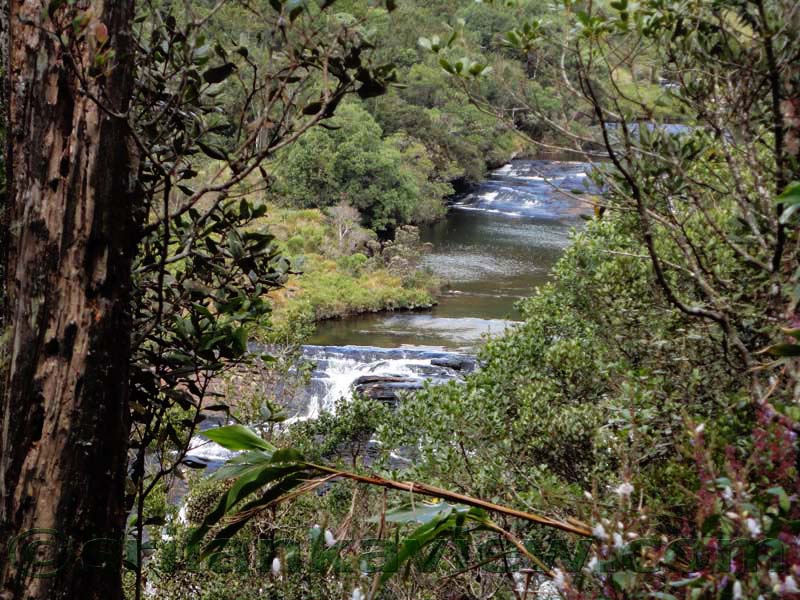
This is the uppermost section of the famous Belihul Oya, which flows beneath the Red Bridge. Belihul Oya is one of the major tributaries of the Walawe River, which ultimately flows into the sea at Ambalantota. The trail continues over the Red Bridge until reaching a "Y" junction, where the path diverges into two directions.
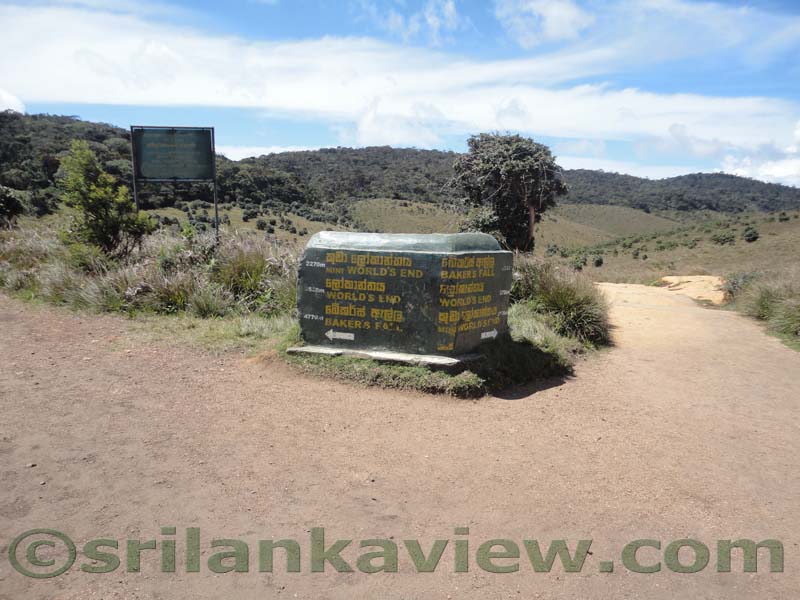
To the Left or Right at Turnoff point?

After crossing the Red Bridge, you arrive at a point where the trail splits into two directions at a "Y" junction, as indicated by the signpost. This is a looped trail, allowing you to take either the left or right path, each covering about 7 km round trip. If the weather is clear and it’s morning, you may catch a stunning view of the escarpments at World's End. Since mist tends to accumulate in the afternoon, it's best to visit these viewpoints as early as possible. Opting to proceed clockwise, or to the left, will lead you first to Mini World's End and then to Greater World's End, ultimately saving time on the trail to Baker's Falls and Chimney Pool.
The World's End at Horton Plains
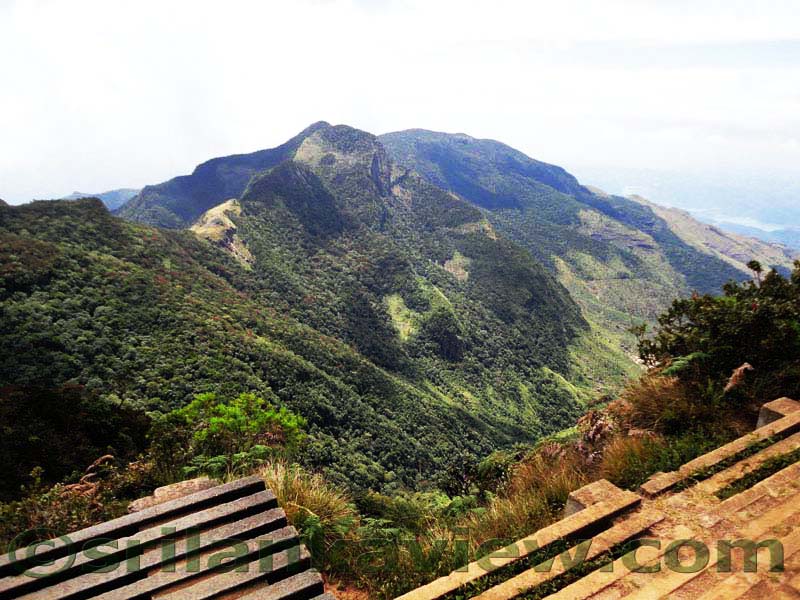
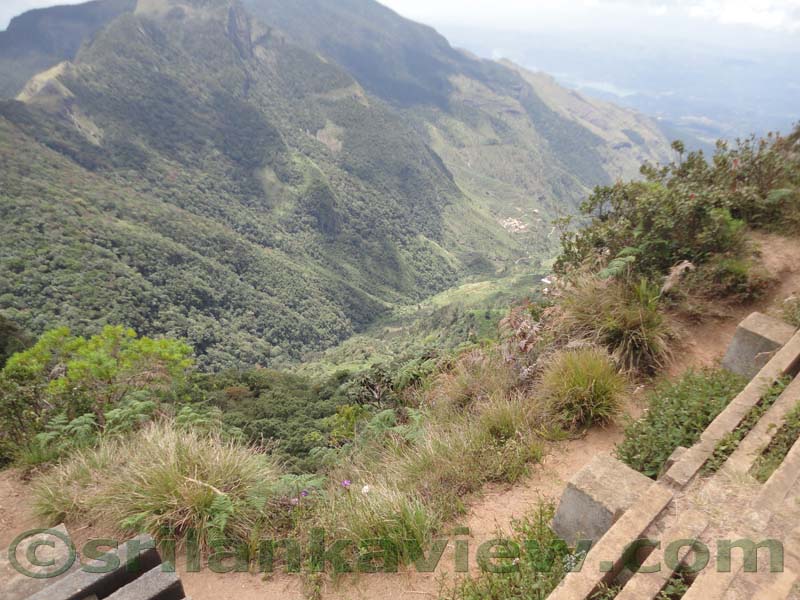
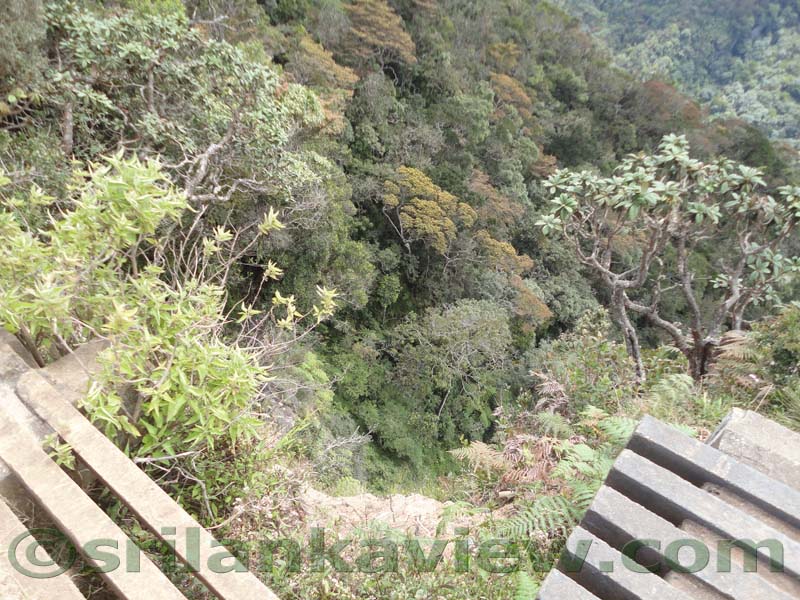
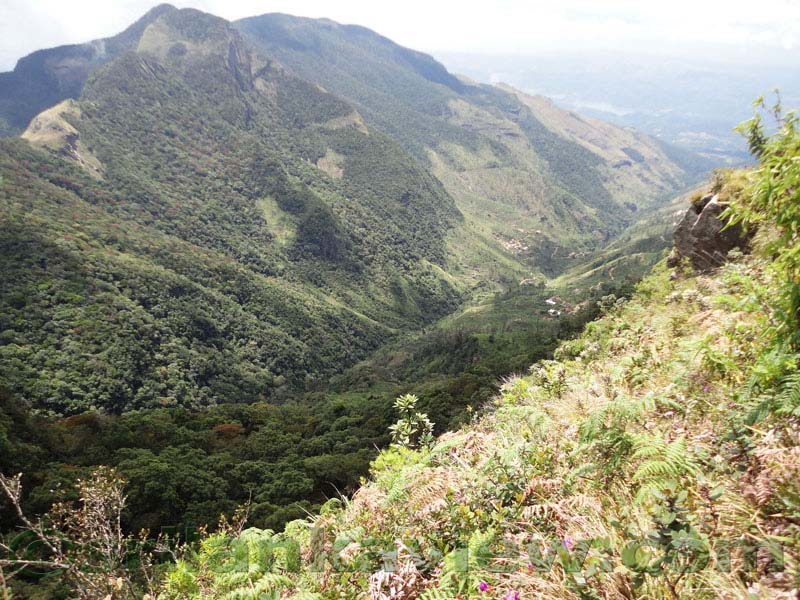
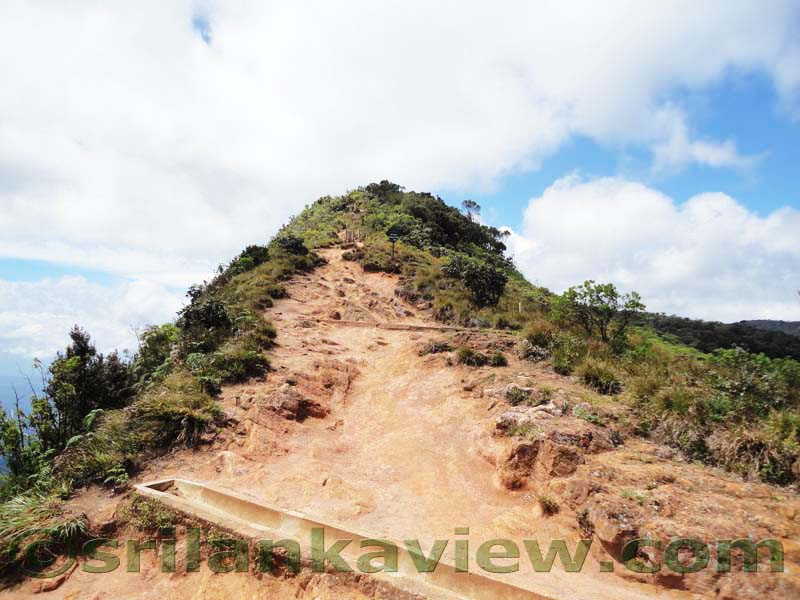
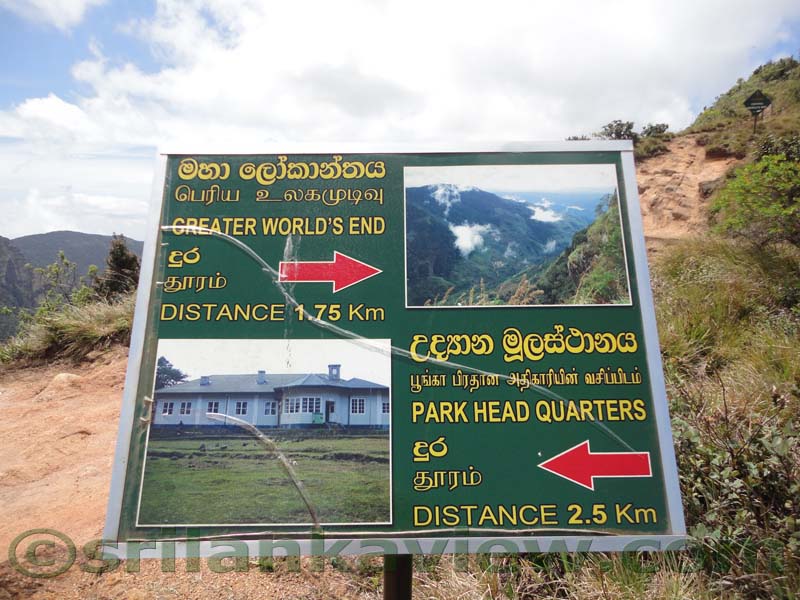
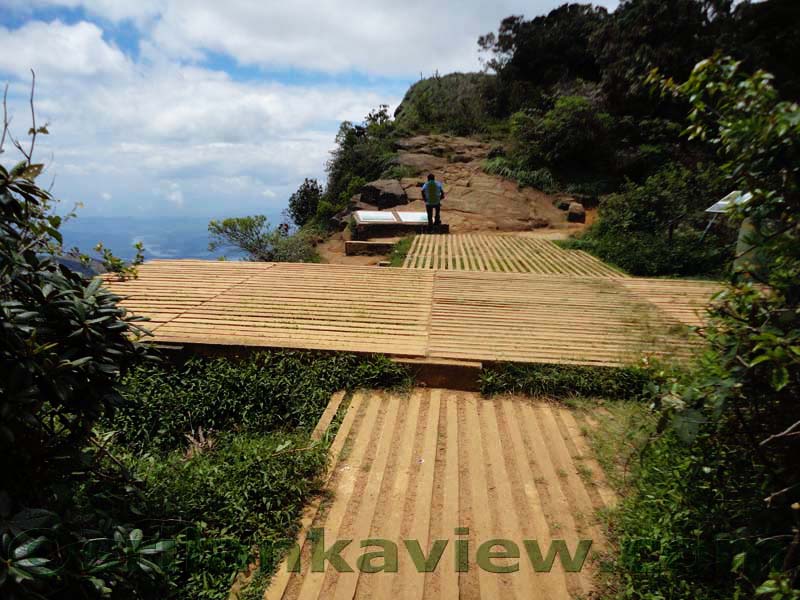
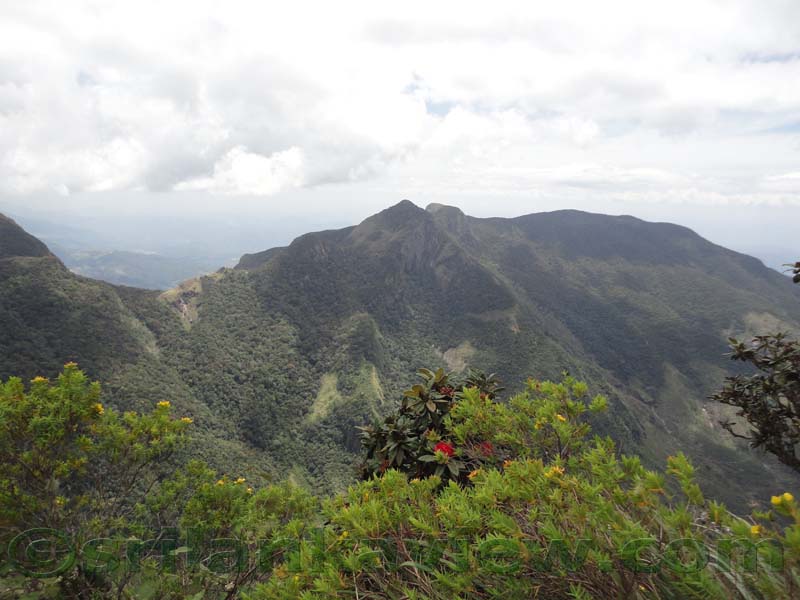
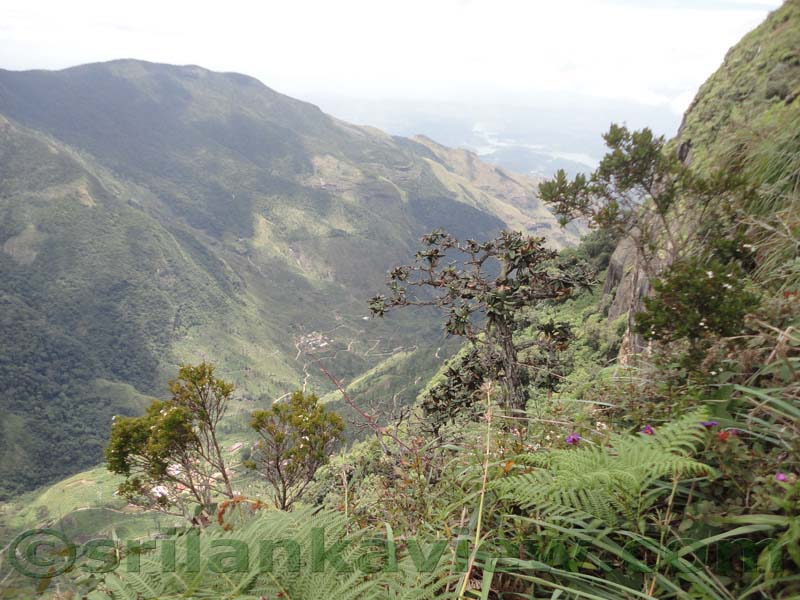
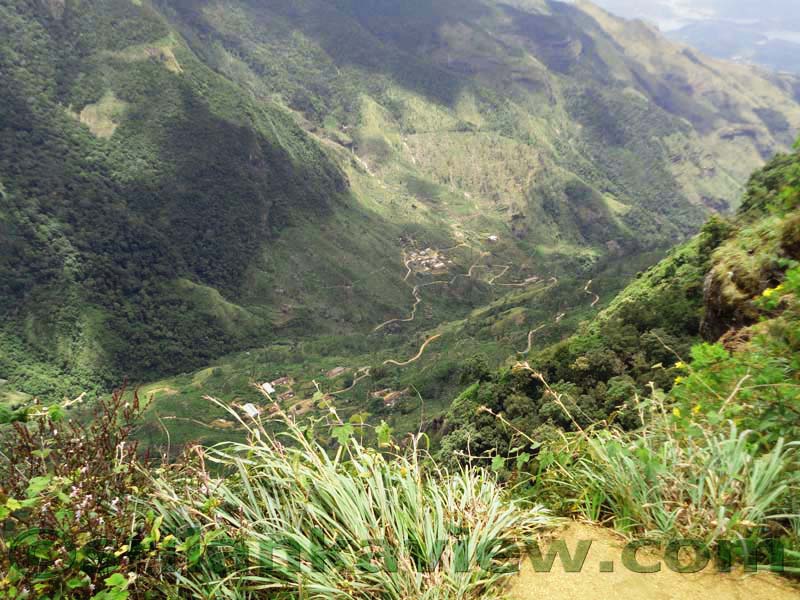
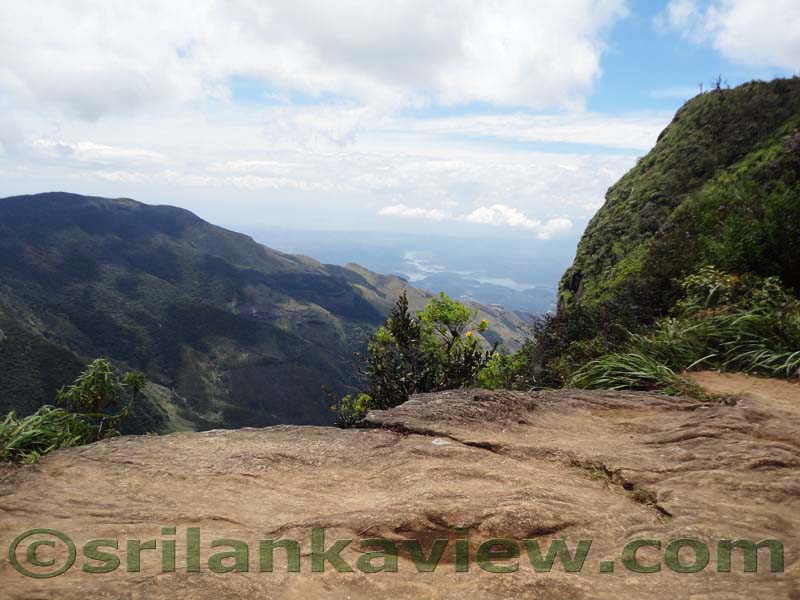
The time taken to reach Mini World's End was approximately 25 minutes from the brick signpost at the trail division and 37 minutes from the Park Entrance Watch Post. Nature was exceptionally kind during this fascinating tour, and the view from Mini World's End was fabulous, as shown above. The escarpment at Mini World's End drop height is 274 meters at this point.
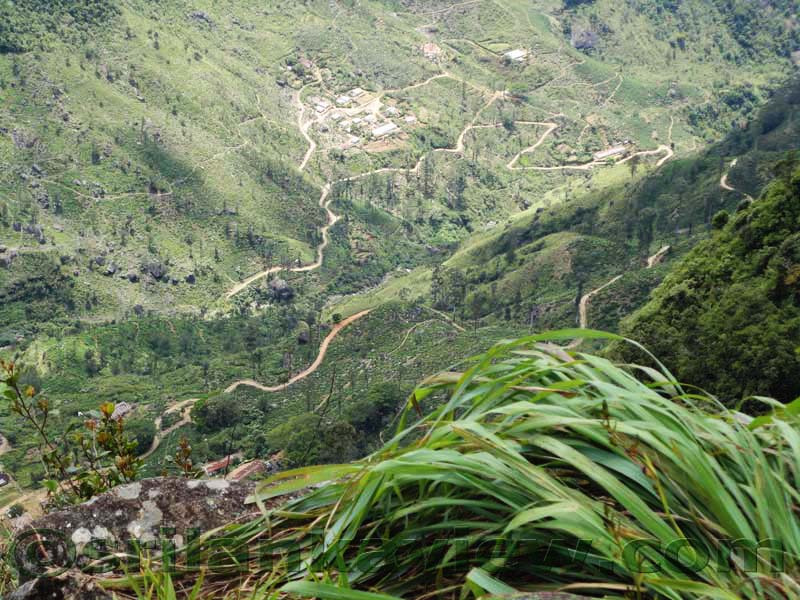
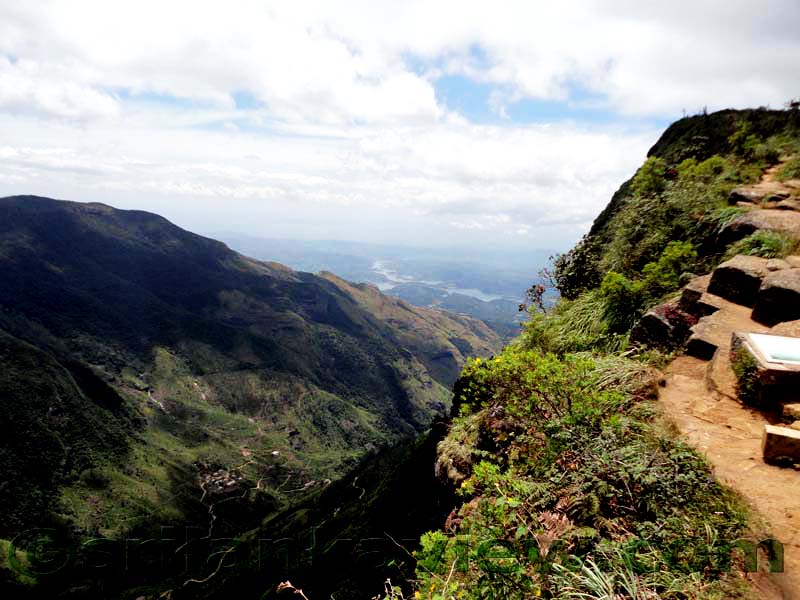
It takes about 25 minutes to reach Greater World's End from Mini World's End. The journey from the Park Entrance Watch Post to this point took us 1 hour and 10 minutes, during which we observed the surroundings and photographed the landscape. The unobstructed view from Greater World's End allowed us to capture images of the Uda Walawe reservoir and the vast Dry Zone plains, with a sheer drop of 2,000 meters from the observation point. The escarpment at Greater World's End descends (drop height) 884 meters at this location.
While the three-dimensional effect experienced in person when standing at the edge of these escarpments cannot be fully captured in photographs, they still provide a good representation of the thrilling and awe-inspiring landscape in these two areas.
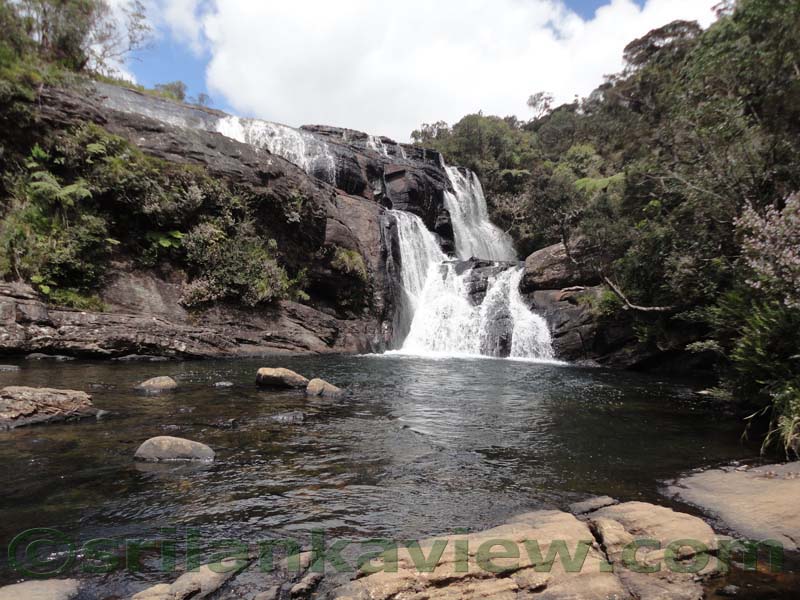
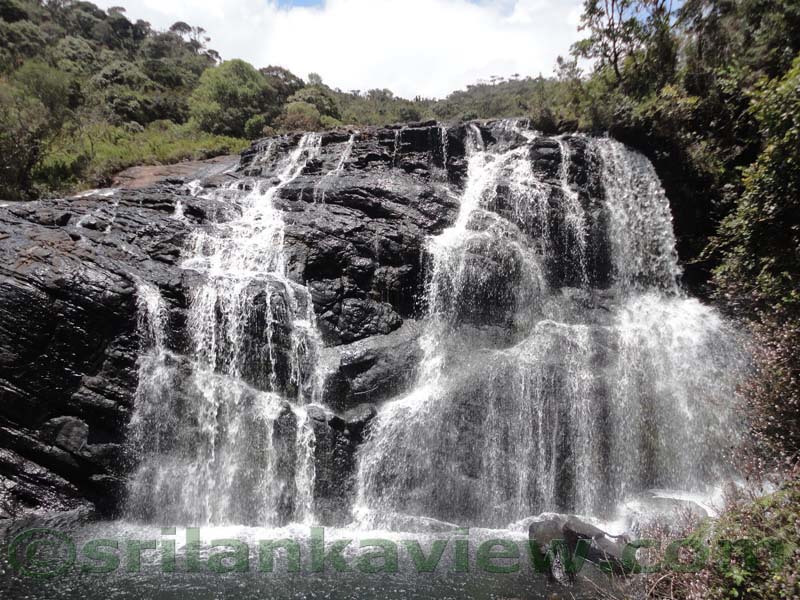
Baker's Falls Waterfall at Horton Plains
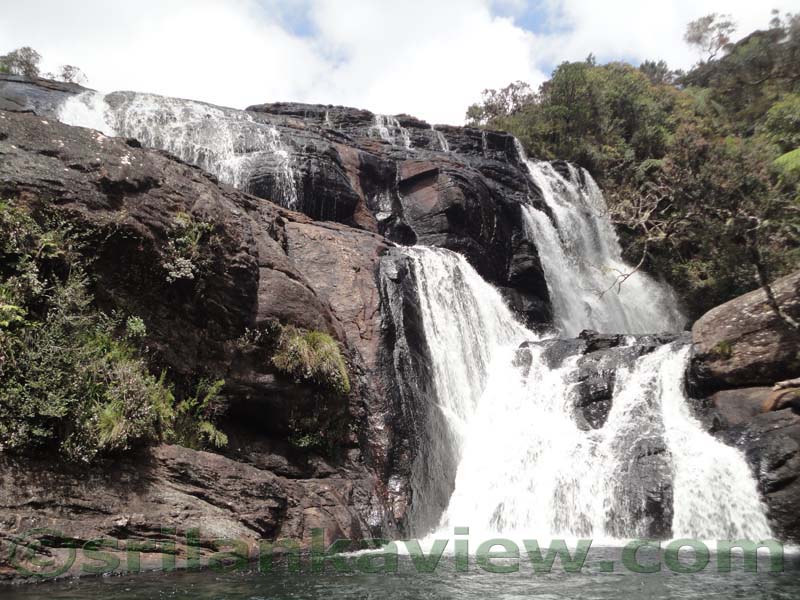
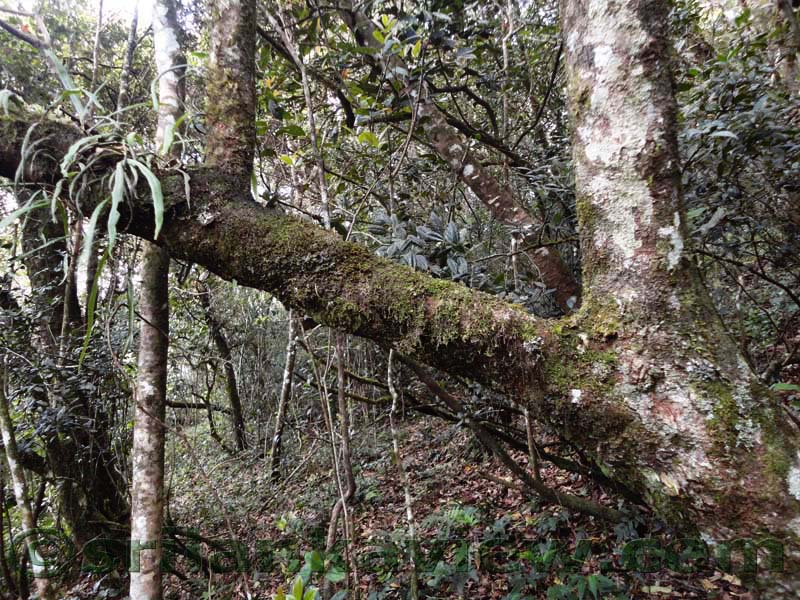
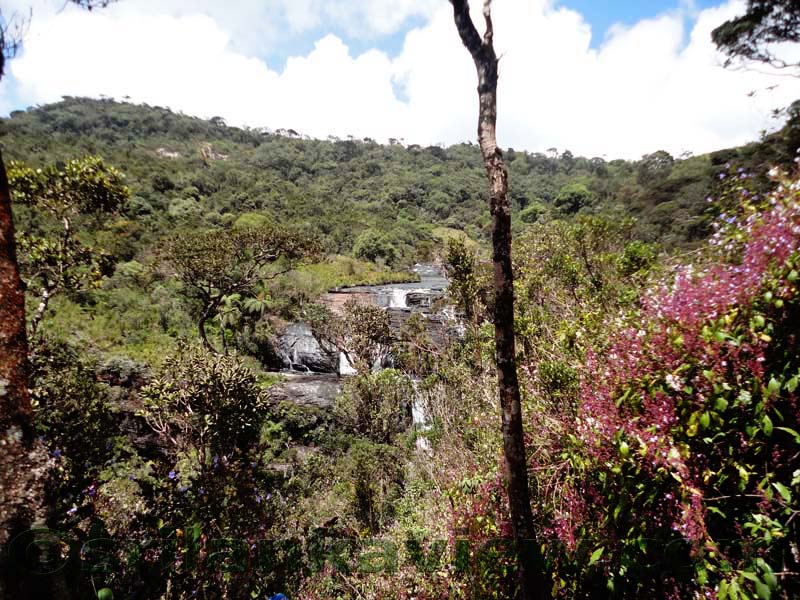
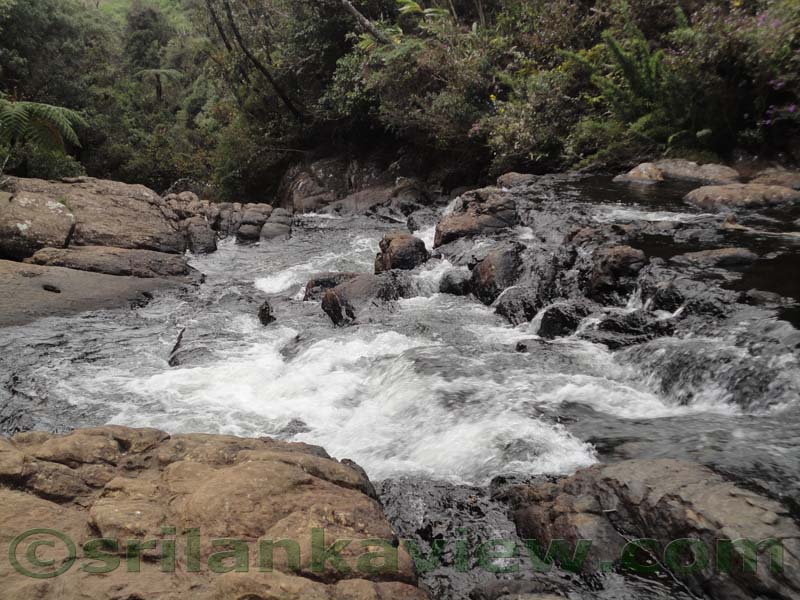
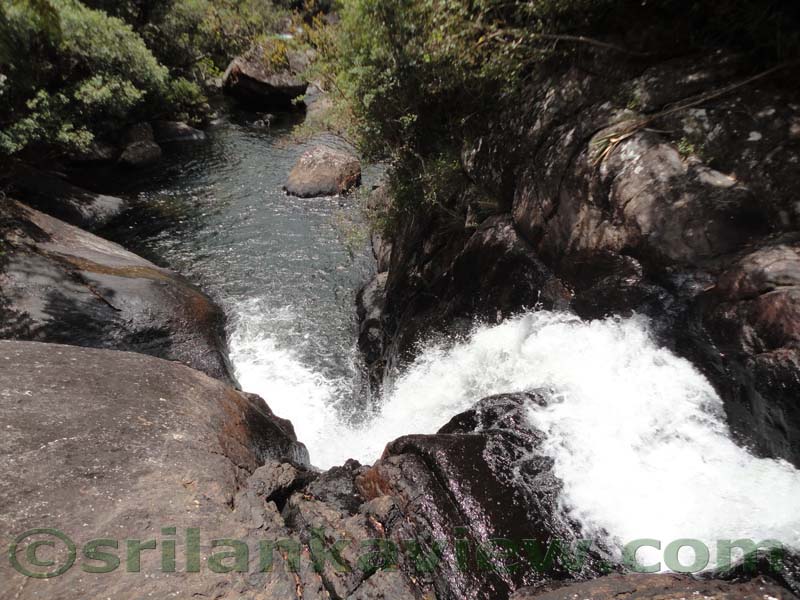
To access this stunning waterfall, visitors must travel through the cloud forest along a designated path from the main trail. There are two access points to the waterfall. While it's easy to overlook this trail, following it will lead you to the base of the waterfall, offering breathtaking views of the cascading water and the vibrant landscapes that surround it.
The Chimney Pool
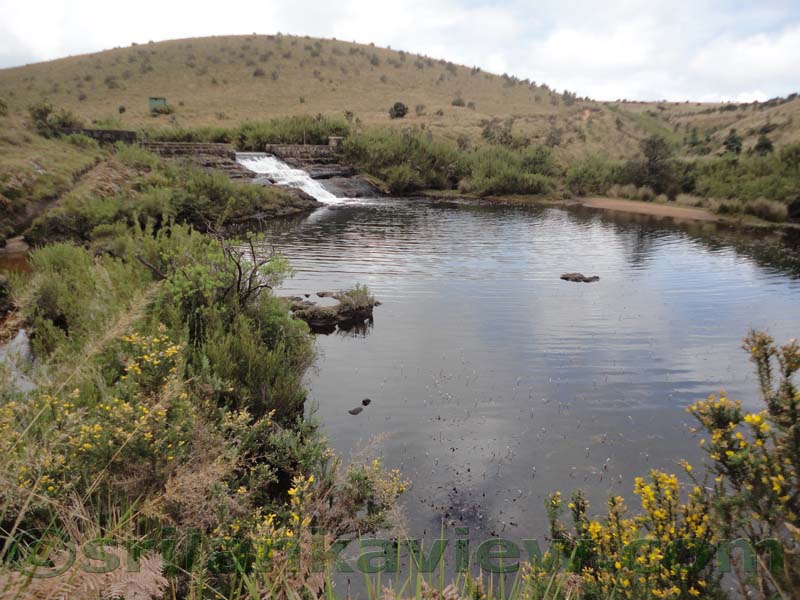
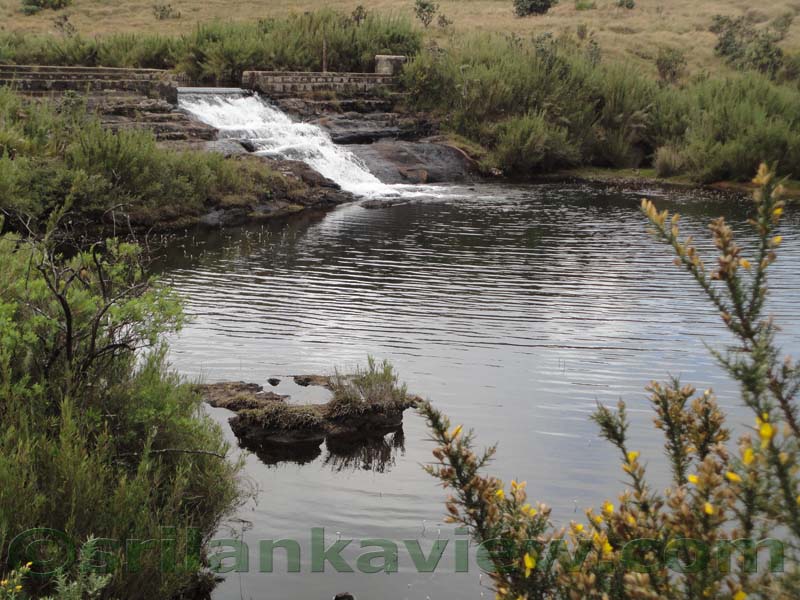
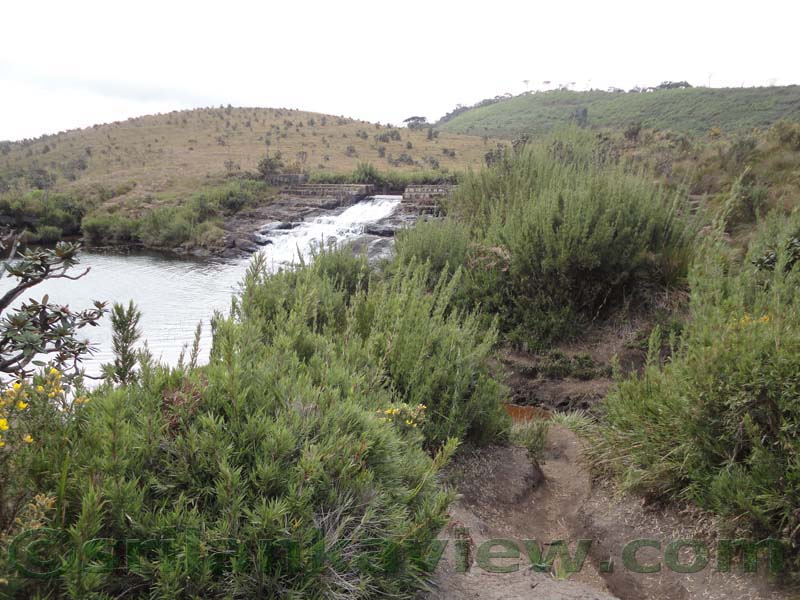
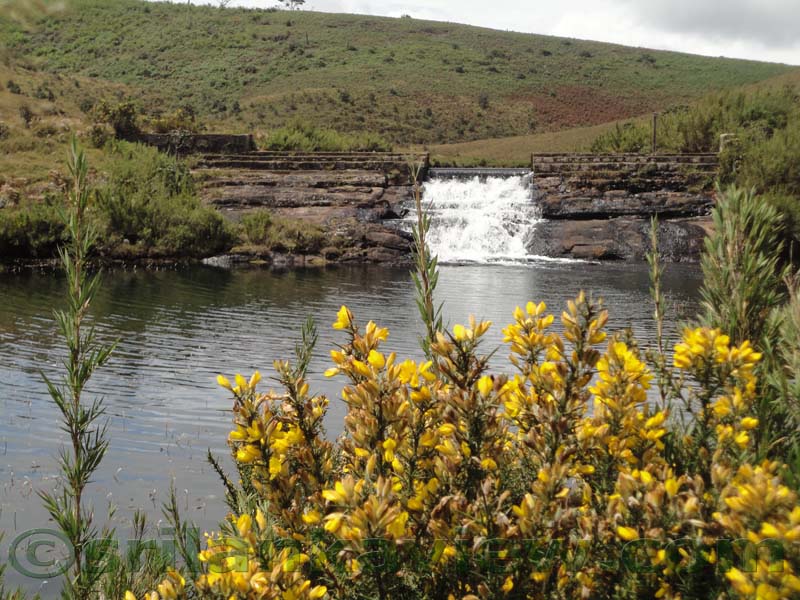
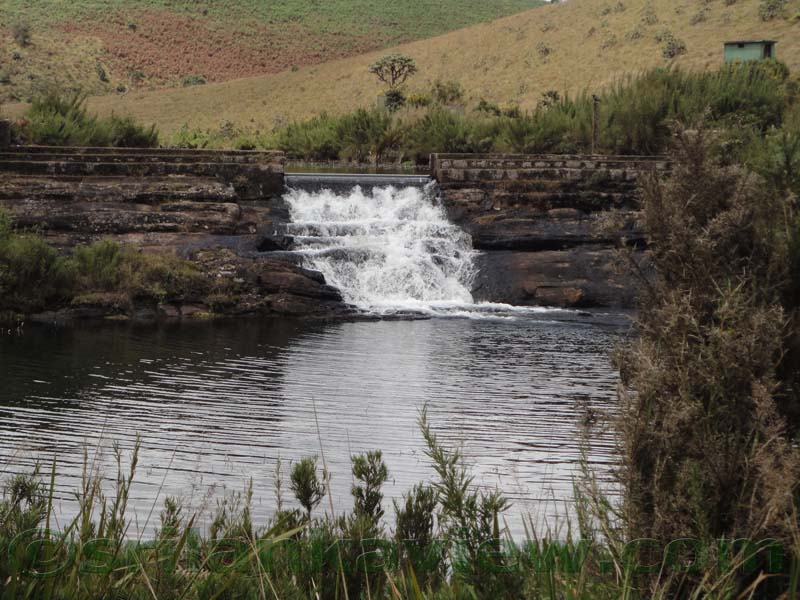
The Chimney Pool is located between Baker's Falls and the signpost at the previously mentioned "Y" junction. This man-made bund, constructed from granite, has created a water mass that flows into the pool below, resembling a small waterfall. The pool is rich with Kekatiya plants (Aponogeton jacobsenii), which can also be spotted in the stream alongside the trail at various points.
Leopard (Panthera pardus) in the Horton Plains
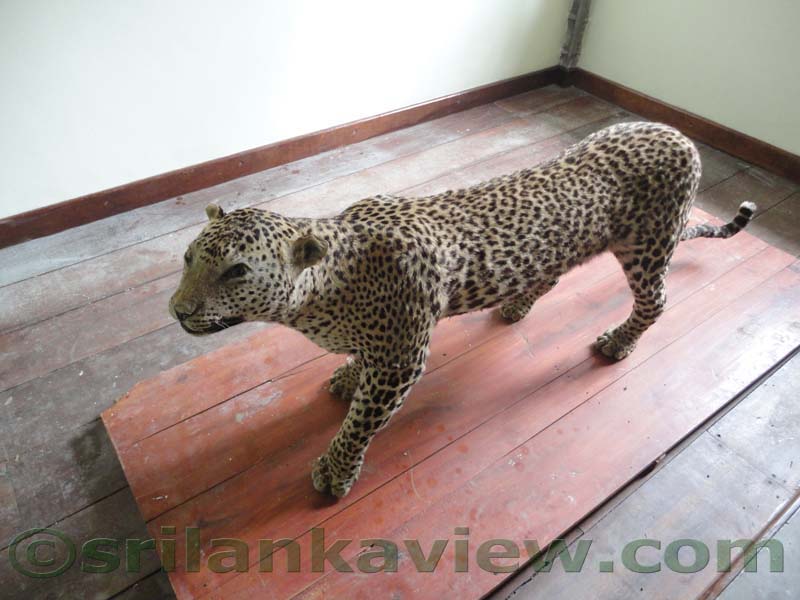
The Leopard in the Horton Plains is shy and avoids daytime appearances. There is a stuffed Leopard in the Visitor Center exhibition room.
Thotupolakanda and Kirigalpotta Trails at Horton Plains
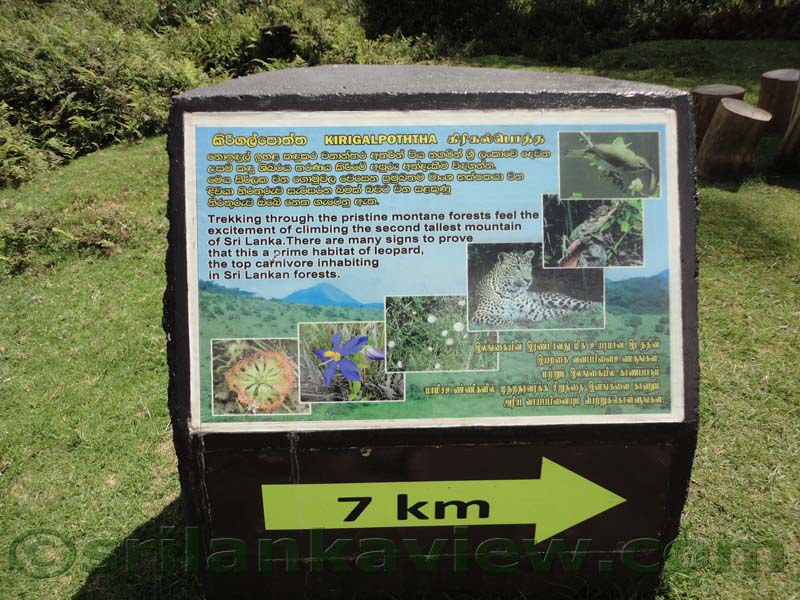
There are two unfrequented Trails at Horton Plains. They are the Trails leading upto the Peaks of Totupolakanda and Kirigalpoththa. The level of difficulty of the Trails are Medium as given by Visitor Center information displays.
Horton Plains Google Map
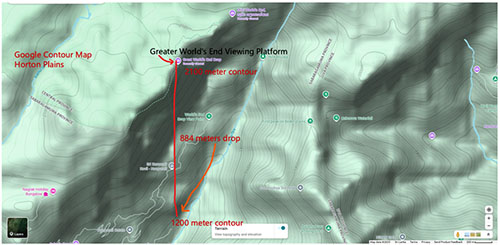 Horton Plains World's End Google Contour Map PDF
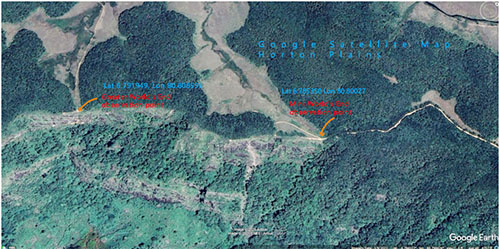 Horton Plains World's End Google satellite Map PDF